Sunny Fabrics | Conductive Foam, Tape & EMI Shielding Can Manufacturer
- We specialize in the design and manufacturing of conductive foam, conductive tape, EMI shielding cans and functional fabrics.
- We specialize in the design and manufacturing of conductive foam, conductive tape, EMI shielding cans and functional fabrics. Our R&D and production team supports customized programmes from material specification through to the delivered part.
1. Customized Product Solutions
- Material and formulation customization to meet different performance requirements
- Thickness, weight and dimension tailored to specific applications
- Functional treatment for ESD, EMI, grounding or RFID targets
- Custom width and density to optimize production efficiency
- Application-specific engineering support from sample to mass production
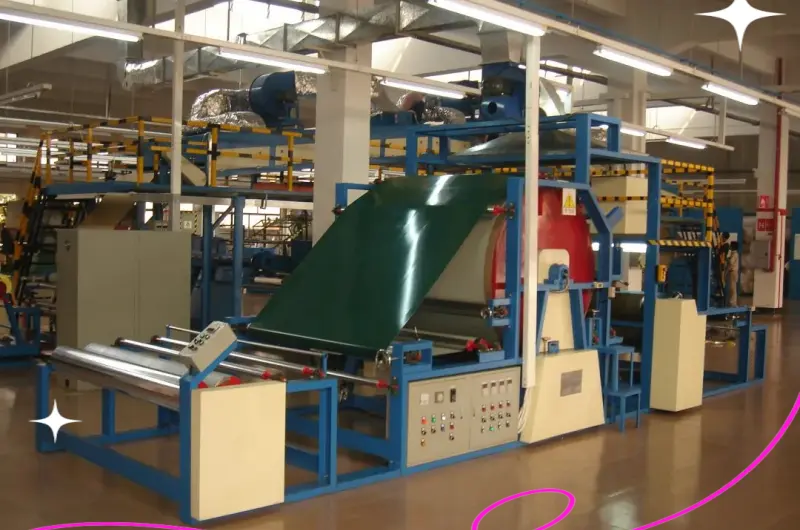
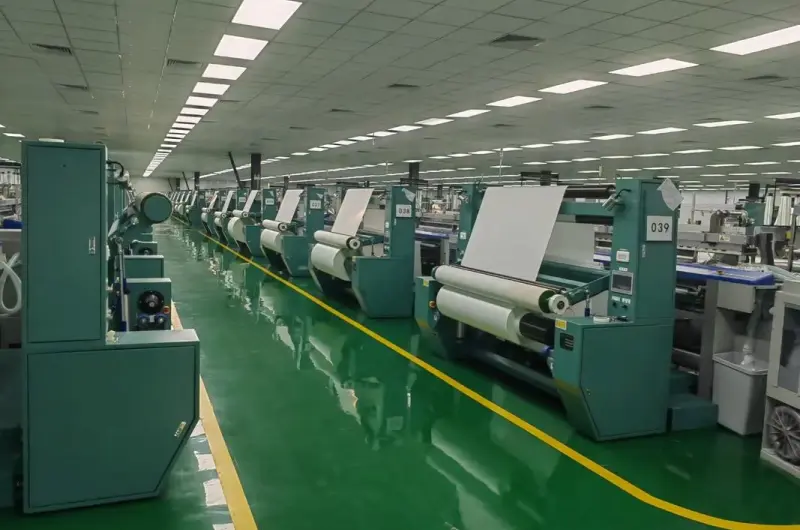
2. OEM and ODM Services
- Customized logo and label printing for brand identification
- Packaging design to upgrade product and brand value
- Specification and structure development for various applications
- Functional formula development for stable and reliable performance
- In-house tooling and converting support for custom part formats
Conductive Tape Manufacturer and OEM/ODM Supplier for EMI Shielding, Grounding, and ESD Applications
If you are sourcing conductive tape for EMI shielding, electrical grounding, or ESD control, the specification sheet is only the starting point. What determines whether a tape performs in mass production, and whether your compliance file survives a customer audit, is the depth of manufacturing control behind it. Sunny Fabrics is a China-based conductive tape manufacturer with integrated capability from conductive fabric weaving and Ni/Cu plating through adhesive lamination, slitting, and custom die-cutting. This guide is written for overseas B2B buyers, OEM project teams, and ODM partners who need to evaluate a conductive tape supplier on engineering substance rather than catalogue breadth.
The global conductive tape market was valued at approximately USD 580.7 million in 2025 and is projected to reach USD 1,039.4 million by 2033, growing at a compound annual growth rate of around 7.55 percent. Demand is driven by consumer electronics, electric vehicles, IoT devices, and 5G communication infrastructure, all of which require reliable EMI shielding, grounding, and electrostatic discharge paths. For overseas buyers, the relevant question is no longer whether China can supply conductive tape at a competitive price. The relevant question is which conductive tape supplier can hold the conductive path stable from plated fabric to adhesive coating, from converting to compliance documentation, and from prototype to mass production.
Sunny Fabrics approaches conductive tape from the material side. The company began with conductive fabric weaving and metal plating, and has extended that capability into tape format. When you select a conductive fabric tape from this category, you are not dealing with a trading intermediary that buys plated fabric externally and slits it to width. You are dealing with a manufacturer that controls the conductive substrate, the adhesive system, the converting process, and the batch-level traceability chain. That distinction matters most when your project requires a narrow surface resistivity band, a defined Z-axis conduction path, a custom die-cut geometry, or a compliance file that covers every homogeneous material in the delivered part.
Why Source Conductive Tape from an Integrated China Manufacturer
Conductive tape performance is determined by two layers: the electrical uniformity of the backing and the conductive mechanism and durability of the adhesive system. A backing with a low average surface resistance but uneven plating can produce localized high-resistance points after die-cutting. An adhesive that meets initial peel strength but migrates under high temperature and humidity can cause contact resistance drift months after assembly, which is a common cause of repeated EMI pre-compliance failures. For buyers, these are not abstract material science concerns. They are the root causes behind line stoppages, field returns, and audit findings.
The Backing Determines Performance More Than the Catalogue Suggests
For conductive fabric tape, the backing is a metallized textile. The plating system, whether Ni/Cu, Ni/Cu with blackening treatment, or another configuration, directly affects surface conductivity, plating adhesion, corrosion resistance, and flex fatigue life. The base fabric weight and weave density influence conformability, tear strength, and the uniformity of adhesive penetration. If a supplier purchases plated fabric from an external source, those parameters are fixed upstream and are not directly controlled by the tape manufacturer. Batch-to-batch resistivity variation, plating adhesion differences, and width consistency become coordination issues between two companies rather than internal process variables.
Sunny Fabrics weaves and plates its Ni/Cu conductive fabric in-house. This means surface resistivity targets, plating uniformity, base fabric weight, and cosmetic finish can be adjusted as part of the tape specification. When a project requires a narrow resistivity band or a specific flex-fatigue target, the fabric stage and the adhesive coating stage can be optimized together under one quality system. For overseas OEM buyers, this reduces the number of parties involved in root-cause analysis when a batch deviates, and it shortens the iteration cycle when a custom construction is required.
What Integrated Manufacturing Changes for Overseas Buyers
Integrated manufacturing changes three things that matter in procurement. First, it changes traceability. A defect found after die-cutting can be traced back to a plating lot, a fabric roll, an adhesive batch, or a converting run within the same supplier's records. Second, it changes customization depth. A true manufacturer can adjust the conductive fabric, the adhesive chemistry, the liner, the thickness, and the die-cut geometry as a coordinated system. Third, it changes response time. When a buyer asks whether a specific surface resistance or Z-axis resistance can be achieved, an integrated manufacturer can answer from process capability rather than from a supplier questionnaire.
This does not mean every project requires a fully custom construction. Many overseas buyers need a standard conductive fabric tape with reliable batch consistency, RoHS and REACH documentation, and dependable export logistics. The point is that the supplier's manufacturing depth determines the ceiling of what can be supported when the project moves beyond a catalogue part number. For OEM and ODM programmes, that ceiling is often the difference between a sample that passes and a production run that sustains yield.
Conductive Tape Product Range by Backing System
Conductive tapes can be segmented by adhesive conductivity, by single- or double-sided construction, or by backing material. For sourcing decisions, the most useful segmentation is by backing system, because the backing determines conformability, gap-filling capability, shielding frequency response, solderability, and the appropriate assembly method. Sunny Fabrics organizes its conductive tape range into four backing-driven families: conductive fabric tape, metal foil conductive tape, conductive foam and gasket tape, and specialty conductive tape.
Conductive Fabric Tape with Ni/Cu Plated Polyester
Conductive fabric tape is the category where Sunny Fabrics' integrated manufacturing capability is most visible. The construction uses Ni/Cu plated polyester fabric as the backing, coated with conductive or non-conductive pressure-sensitive adhesive. Representative performance for Ni/Cu fabric tape includes surface resistivity in the range of <0.03 to <0.05 ohm per square and shielding effectiveness of 70 to 75 dB at 100 MHz to 1 GHz under ASTM D4935 testing. High-flex variants are available for dynamic bend applications, where plating adhesion and weave structure determine flex-fatigue life more than nominal conductivity alone.
This family is suitable for flat or moderately curved interfaces where conformability, thin profile, and flex fatigue resistance are priorities. Typical uses include PCB grounding, FPC grounding, cable shielding termination, display module grounding, and narrow-frame chassis grounding. The key selection variable is not simply whether the tape is conductive. It is whether the adhesive is conductive in the Z-axis. If the grounding path must pass through the adhesive to the substrate, a conductive adhesive is required. If the grounding path is established along the fabric surface and terminated by a mechanical contact or a conductive gasket, a non-conductive adhesive may be acceptable and can offer different adhesion and cost characteristics.
Metal Foil Conductive Tape: Copper, Aluminum, and Tinned Copper
Metal foil conductive tape uses copper foil, aluminum foil, or tinned copper foil as the backing. Copper foil tape is the default choice for PCB grounding pads and shielding enclosures that require solderability. Aluminum foil offers a lighter and lower-cost option for cabinet-level shielding and general EMI gasketing. Tinned copper combines conductivity with improved corrosion resistance and solderability in humid or harsh environments.
Selection variables include foil temper, adhesive conductivity, liner strategy, and total thickness. Soft-tempered foil conforms better to curved surfaces but requires roller pressure during application to prevent edge lift. Rolled foil holds dimensional stability better in die-cut formats but is less forgiving on irregular surfaces. For overseas OEM buyers, the important question is whether the supplier can match the foil temper and adhesive system to the assembly method. A tape that performs well in a manual hand-application trial may fail in an automated placement line if the liner release force and stiffness are not matched to the equipment.
Conductive Foam and Gasket Tape
Conductive foam tape wraps a conductive fabric skin around a compressible foam core and coats one face with conductive pressure-sensitive adhesive. Its performance logic is different from thin tapes. Surface resistance is typically 0.05 ohm per square or lower, but compression set and rebound under temperature and load determine long-term contact reliability. Shielding effectiveness in the 30 MHz to 3 GHz range commonly falls between 60 and 85 dB depending on thickness. The family is the correct choice when the interface has 0.3 to 3 mm of gap variation, assembly tolerance, or vibration, and it simultaneously provides shielding, cushioning, and gap-filling.
This family is not interchangeable with thin fabric or foil tapes in interfaces with measurable gap or dynamic load. Conversely, thin tapes are not a substitute where compression force and recovery are part of the grounding design. A common sourcing error is to use a thin conductive fabric tape in a vibrating automotive or appliance interface to save thickness, only to find adhesive failure and resistance drift within months. Another common error is to use a foam gasket tape in a reflow-soldered SMT process, where the adhesive system cannot withstand the thermal profile.
Specialty Conductive Tape
This category covers semi-conductive non-woven tapes, carbon-based conductive tapes, and conductive adhesive films for fine-pitch interconnection. These products typically address requirements that standard fabric, foil, or foam tapes cannot satisfy, such as semi-conductive shielding layers on cable cores, low-chloride constructions for sensitive electronic environments, or adhesive films with controlled conductive particle distribution. Specialty conductive tape projects are usually ODM-led, where the tape structure is defined around a specific failure mode or assembly constraint rather than selected from a catalogue.
Conductive Tape Selection Logic: Match the Interface, Not the Datasheet Number
A recurring sourcing error is choosing between fabric, foil, and foam tapes by comparing surface resistivity values alone. These families fail for different reasons, and the correct entry point is the interface condition, not the lowest resistance figure. The following comparison summarizes the decision logic used in most overseas OEM programmes.
| Backing Family | Typical Surface Resistance | Shielding Effectiveness | Gap Filling | Best-Fit Interface |
|---|---|---|---|---|
| Conductive Fabric Tape | <0.03 to <0.05 ohm/sq | 70 to 75 dB, 100 MHz to 1 GHz | Low | Flat or curved surfaces, flex and bending zones, PCB and FPC grounding |
| Metal Foil Conductive Tape | Very low, backing-dependent | High, frequency-dependent | Low | Solderable grounding pads, shielding enclosures, cabinet seams |
| Conductive Foam / Gasket Tape | 0.05 ohm/sq or lower | 60 to 85 dB, 30 MHz to 3 GHz | High | Interfaces with tolerance, vibration, or 0.3 to 3 mm gap |
| Specialty Conductive Tape | Project-specific | Project-specific | Variable | Cable semi-conductive shielding, carbon paths, fine-pitch interconnection |
Surface resistivity also requires directional literacy. Supplier-quoted ohm per square figures typically describe XY surface resistance on the fabric side. Grounding reliability, however, often depends on Z-axis resistance, which is conduction through the adhesive to the substrate. If the adhesive is non-conductive, a fabric with excellent surface conductivity can still present an insulating Z-axis path. Procurement specifications should explicitly state whether XY resistance, Z-axis resistance, or both are acceptance criteria, and should require test data in the corresponding direction.
What Overseas Buyers Should Verify Before Committing to a Conductive Tape Supplier
The questions that separate a reliable conductive tape manufacturer from a trading intermediary are consistent across regions and applications. The following checklist reflects what experienced OEM purchasing and engineering teams actually probe during supplier qualification.
Is the Conductive Fabric Made In-House or Purchased?
This is the first filter. Ask directly whether the supplier operates the plating process for the conductive fabric. A true integrated manufacturer can adjust properties at the plated-layer level. A converter depends on external fabric supply for both quality and lead time. For projects involving custom surface resistivity targets, plating adhesion requirements, or fabric weight changes, external fabric sourcing introduces a coordination layer that slows iteration and obscures root-cause analysis when batch variation appears. Buyers should ask for the plating process location and the traceability record that links a finished tape roll to a specific fabric lot.
How Deep Does Customization Actually Go?
Custom slitting is a converting service. Custom formulation is a manufacturing capability. Overseas OEM buyers should distinguish between suppliers that can only cut a stocked jumbo roll to width and those that can adjust adhesive glass transition temperature, adhesion, cohesion, and heat resistance, change substrate thickness, switch between single- and double-sided constructions, and die-cut to drawing. For ODM projects, the supplier should be able to start from the application's grounding or shielding function and work backward to a tape structure, rather than simply quoting the closest catalogue item.
What Reliability Data Exists, and Under Which Standards?
Initial properties matter less than how they hold up after temperature cycling, humidity exposure, and aging. Ask for reliability test data with the test standard explicitly stated, whether ASTM, MIL, PSTC, or an equivalent method, because figures are not comparable across methods. For conductive tape, useful data includes surface and Z-axis resistance after damp heat or thermal cycling, peel adhesion retention after aging, and shear adhesion at elevated temperature. A datasheet that lists a resistance threshold without stating the test method, direction, and conditioning history is not an engineering document.
How Does Converting Affect the Conductive Path?
Custom converting is not a cosmetic operation. Part geometry, contact area, slit direction, liner strategy, and edge design all influence whether the grounding path remains stable in assembly. A supplier experienced in converting should ask whether the part is applied manually or automatically, how much misalignment the conductive area can tolerate, and whether the liner and kiss-cut design support the line cycle time. For die-cut conductive tape projects, the supplier's ability to protect the conductive path through the converting process is a better predictor of production success than the raw tape's datasheet performance.
What Does the Compliance File Actually Cover?
For EU-bound or brand-customer programmes, RoHS and REACH compliance cannot be verified at the finished-goods level alone. RoHS 2.0 restricts ten substances at the homogeneous-material level, and conductive tape requires component-level verification across the adhesive layer, the backing, the release liner, and any conductive coating or plating. REACH SVHC obligations apply per homogeneous material, and REACH Annex XVII restrictions, including phthalates, short-chain chlorinated paraffins, and PFAS, must be checked against the specific adhesive and coating chemistry.
A critical and often overlooked point is that if the tape is subsequently slit, laminated, or die-cut, auxiliary materials used in those secondary processes can introduce restricted substances not present in the original roll. The supplier's compliance documentation should follow the actual delivered form, not just the raw material lot. Overseas buyers should confirm that the compliance file covers the delivered part number, not a generic product family statement.
What Are the Commercial and Logistics Realities?
For overseas buyers, manufacturing capability must be paired with export-ready commercial terms. Typical conductive tape supply from China operates on minimum order quantities ranging from one roll for samples to 100 square meters or more for custom bulk, with standard lead times around 15 working days for stock constructions and 25 to 30 days for non-stock custom builds. Payment terms commonly include T/T, L/C, and D/P. Incoterms options include EXW, FOB, CIF, and DDP.
HS classification for conductive tape is not uniform. Adhesive-backed foil or plastic film tapes are commonly classified under 3919.90, while fabric-based conductive tapes may fall under 5911.90 or textile chapter headings depending on construction. A supplier that understands these distinctions reduces the risk of customs delays and duty surprises. Buyers shipping to the EU or North America should also confirm whether the supplier can provide the documentation format required by their customs broker, including material descriptions, country of origin statements, and preference documentation where applicable.
Sunny Fabrics OEM and ODM Capability: From Fabric to Finished Die-Cut
The value of an integrated conductive tape manufacturer is most visible when a project moves beyond catalogue selection. Sunny Fabrics' OEM and ODM service is structured around four layers of customization.
Substrate-Level Customization
Ni/Cu plated conductive fabric can be adjusted for surface resistivity band, base fabric weight, weave pattern, and cosmetic finish, including blackened variants for low-visibility applications. Because plating is performed in-house, the resistivity target can be set at the fabric stage and carried through adhesive coating with a single traceability chain. For projects that require a specific flex-fatigue life, the weave structure and plating adhesion can be evaluated together rather than treated as independent variables.
Adhesive and Construction-Level Customization
Conductive or non-conductive pressure-sensitive adhesive selection, single- versus double-sided configuration, liner type, and total thickness are specified per application. For foil tapes, soft copper, tinned copper, and rolled copper options are available with matching adhesive systems. For foam tapes, compression characteristics and foam core density are selected against the interface's closure force and gap range. For fabric tapes, adhesive chemistry can be matched to the substrate, whether that is a painted metal chassis, an anodized aluminum frame, a plastic housing, or a flexible printed circuit.
Converting-Level Customization
Slitting width, roll length, kiss-cut and through-cut die-cutting, and multilayer lamination are performed against customer drawings or samples. For overseas OEM assembly lines, converted parts can be supplied on project-specific liner layouts to support manual or automated placement. Dimensional tolerance, edge quality, and liner release force are controlled as part of the delivered specification, not treated as incidental converting variables.
Compliance and Documentation
Batch-level RoHS and REACH SVHC documentation, material traceability records, and retention samples are provided. Where secondary converting is performed, the compliance review covers the auxiliary materials introduced in that step, not only the incoming roll. For buyers with brand-customer audits, the documentation package can be structured to follow the delivered part number and the homogeneous material breakdown.
Applications Supported by Sunny Fabrics Conductive Tape
Conductive tape from Sunny Fabrics is used across consumer electronics, automotive electronics, industrial equipment, and communication infrastructure. Common applications include PCB and FPC grounding, cable shielding termination, display module and chassis grounding, EMI shield can attachment, connector shell grounding, ESD discharge paths, battery module grounding and bonding, and cabinet seam shielding. Each application places different demands on the tape, and the selection process should begin with the interface condition, the assembly method, and the environmental exposure rather than with a generic conductivity target.
For automotive and industrial applications, temperature resistance, vibration resistance, and long-term compression set are usually the limiting factors. For consumer electronics, thin profile, conformability, and clean die-cut edges are often more important than maximum shielding effectiveness. For communication infrastructure, shielding effectiveness across the relevant frequency band and corrosion resistance in outdoor or humid environments are typically the dominant requirements. Matching the tape family to the application's dominant failure mode is more effective than optimizing a single datasheet parameter.
How to Start a Conductive Tape Project with Sunny Fabrics
The fastest path from this category page to a working sample is to submit the application conditions rather than a competitor's part number. Useful inputs include the substrate material or materials to be bonded, the interface gap range, the target surface resistance or Z-axis resistance, the shielding frequency band if applicable, the operating temperature and humidity, the assembly method whether manual or automated, the expected annual volume, and the required delivery format, whether jumbo roll, slit roll, or die-cut part.
With those inputs, Sunny Fabrics' engineering team can recommend a backing family and adhesive system, provide a sample in the appropriate construction, and quote against the actual converting requirement. For ODM projects, the process starts from the application's grounding or shielding function and works backward to a tape structure, including substrate selection, adhesive chemistry, liner strategy, and part geometry. For OEM projects using an established construction, the process focuses on confirming the specification, validating batch consistency, and preparing the compliance file for the delivered form.
For buyers who have previously sourced conductive tape from catalogue distributors or converters, the comparison point is not a lower price per roll. It is whether the supplier can hold the conductive path stable through plating, coating, converting, and compliance review, and explain with data how that control is maintained. Sunny Fabrics is structured to answer that question at each layer of the manufacturing chain, from conductive fabric weaving to the final die-cut part.
Related Categories
Buyers sourcing conductive tape often require complementary materials from adjacent categories. Related product families include conductive fabric for gaskets and shielding wraps, ESD fabric for anti-static workwear and packaging, and EMI shielding fabric for enclosure lining and cable wrapping. Reviewing these categories alongside conductive tape helps confirm that the substrate, adhesive, and converting requirements are consistent across the full bill of materials.