Anti-Static & Conductive Fabric Solutions – OEM/ODM Partner in China
Static electricity is an invisible risk in modern manufacturing. In electronics assembly, semiconductor fabrication, cleanroom operations and hazardous industrial environments, an uncontrolled discharge can destroy sensitive components, contaminate processes or create safety hazards. For wholesalers, brand owners and procurement teams sourcing protective textiles, the challenge is not simply finding fabric, but finding a manufacturing partner who understands the technical, commercial and logistical demands of the international market. This page explains how our China-based factory approaches anti-static and conductive fabric production, and how we support OEM and ODM buyers worldwide.
Why Anti-Static and Conductive Fabrics Matter
Electrostatic discharge occurs when charge accumulated on a material surface transfers rapidly to another object at a different potential. In environments handling electrostatic discharge sensitive devices, human body voltages can reach several thousand volts through normal movement and friction. The IEC 61340-5-1 standard, which governs ESD control programs for organisations handling electronic parts, recognises withstand voltages as low as 100 V human body model and 200 V charge device model for highly sensitive components. A single unnoticed discharge at these levels can cause latent damage that only appears months later in the field.
Protective fabrics are therefore engineered to control charge generation, provide a controlled path to ground, and maintain performance throughout the garment life cycle. The difference between an effective ESD garment programme and a failing one often comes down to the fabric specification and the consistency with which it is produced.
Key performance characteristics buyers should specify include:
- Surface resistance within the static dissipative range, typically 10⁴ to 10¹¹ Ω
- Charge decay time, often required to dissipate 90% of an applied 5,000 V within two seconds or less
- Friction voltage below 100 V for electronic-grade applications
- Retention of electrical performance after repeated industrial laundering
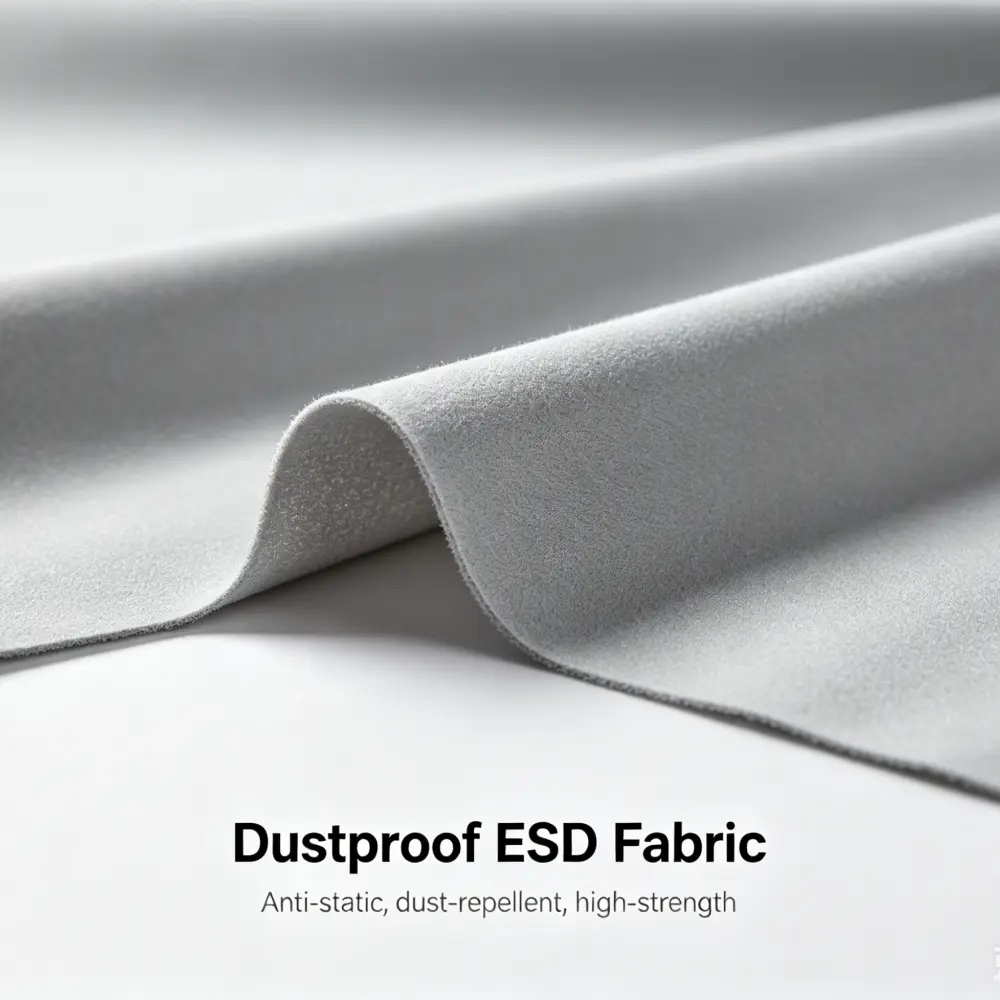
- Compatibility with cleanroom particle and contamination requirements
These parameters form the technical foundation of any serious sourcing specification for ESD anti-static fabrics.
Fabric Construction: How Anti-Static Performance Is Engineered
Anti-static and conductive fabrics achieve their electrical properties through the integration of conductive elements into the textile structure. The method of integration determines not only electrical performance but also comfort, durability and appearance.
Conductive Yarn Systems
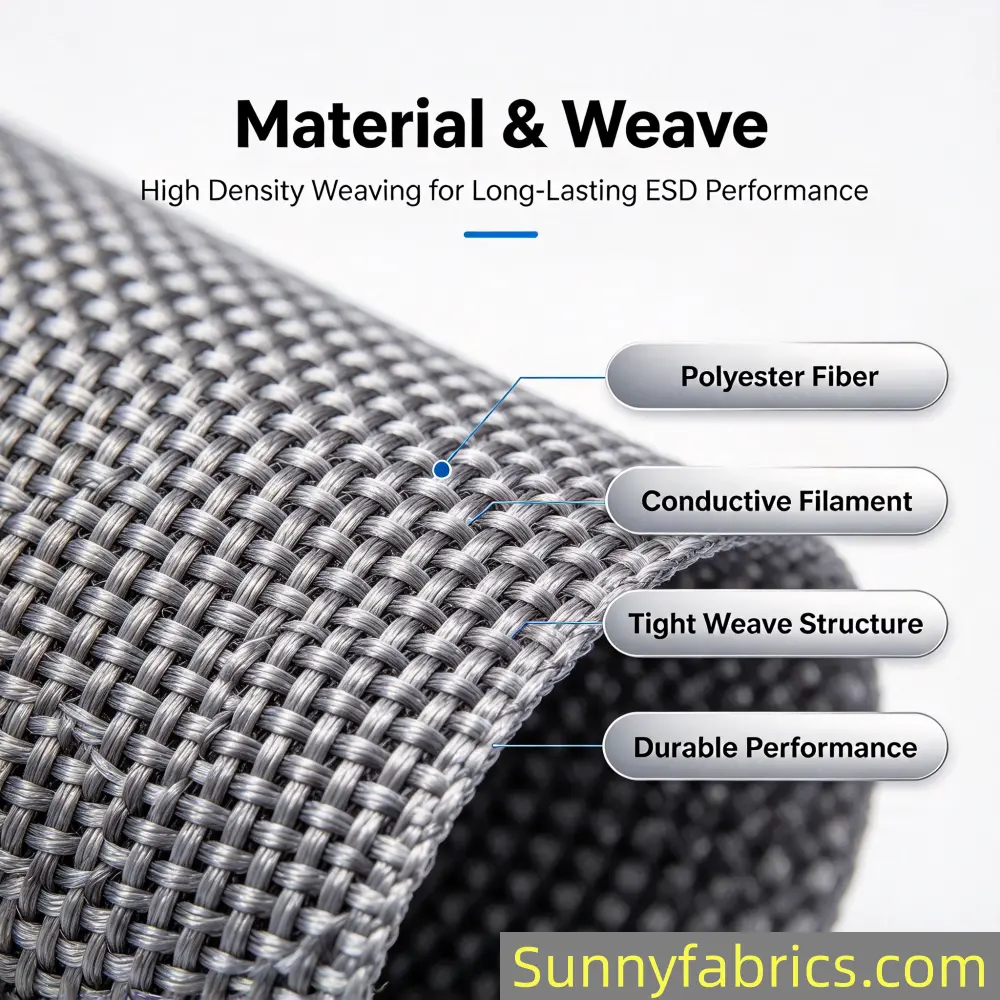
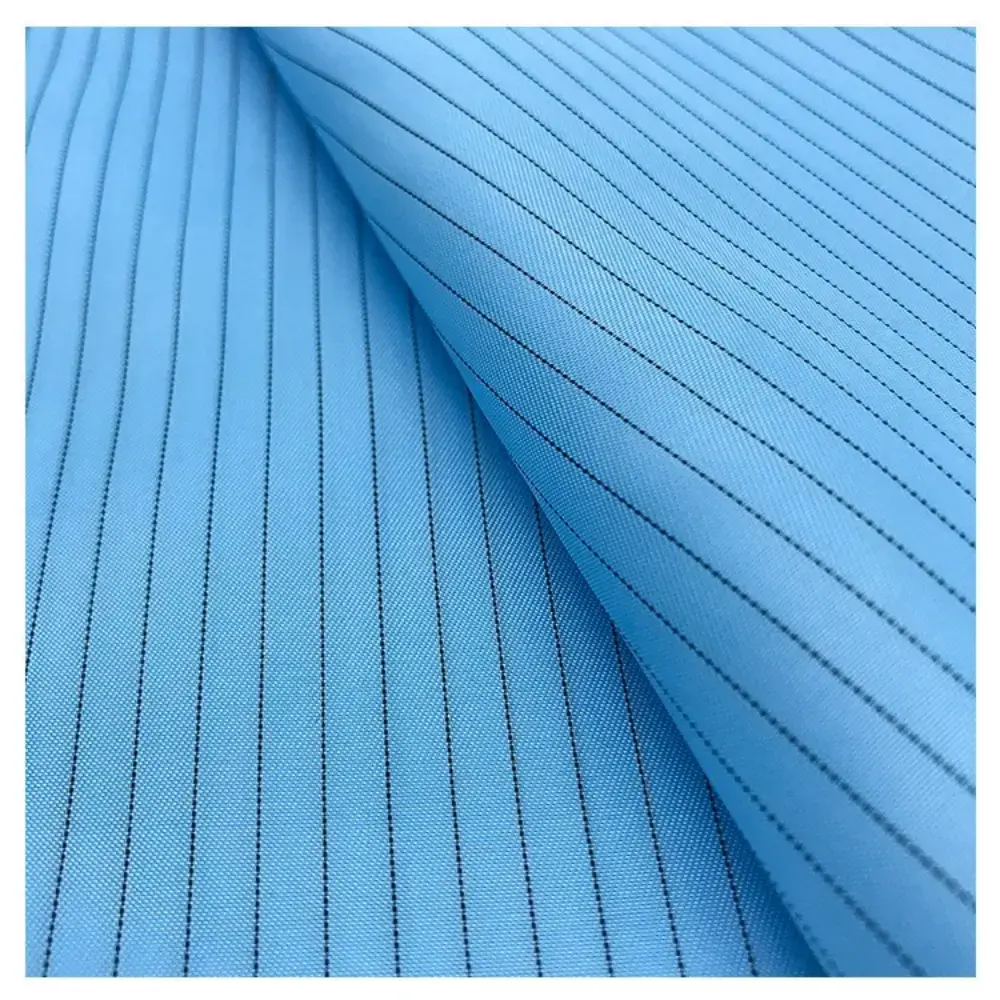
The most common approach blends conductive fibres with conventional textile yarns. Carbon-suffused acrylic fibres are widely used in spun yarns, typically combined with polyester and cotton. A representative blend might contain approximately 63% polyester, 35% cotton and 2% carbon fibre. When woven, the conductive fibres create a network of junctions along and across the fabric, allowing charge to dissipate without a continuous metallic path.
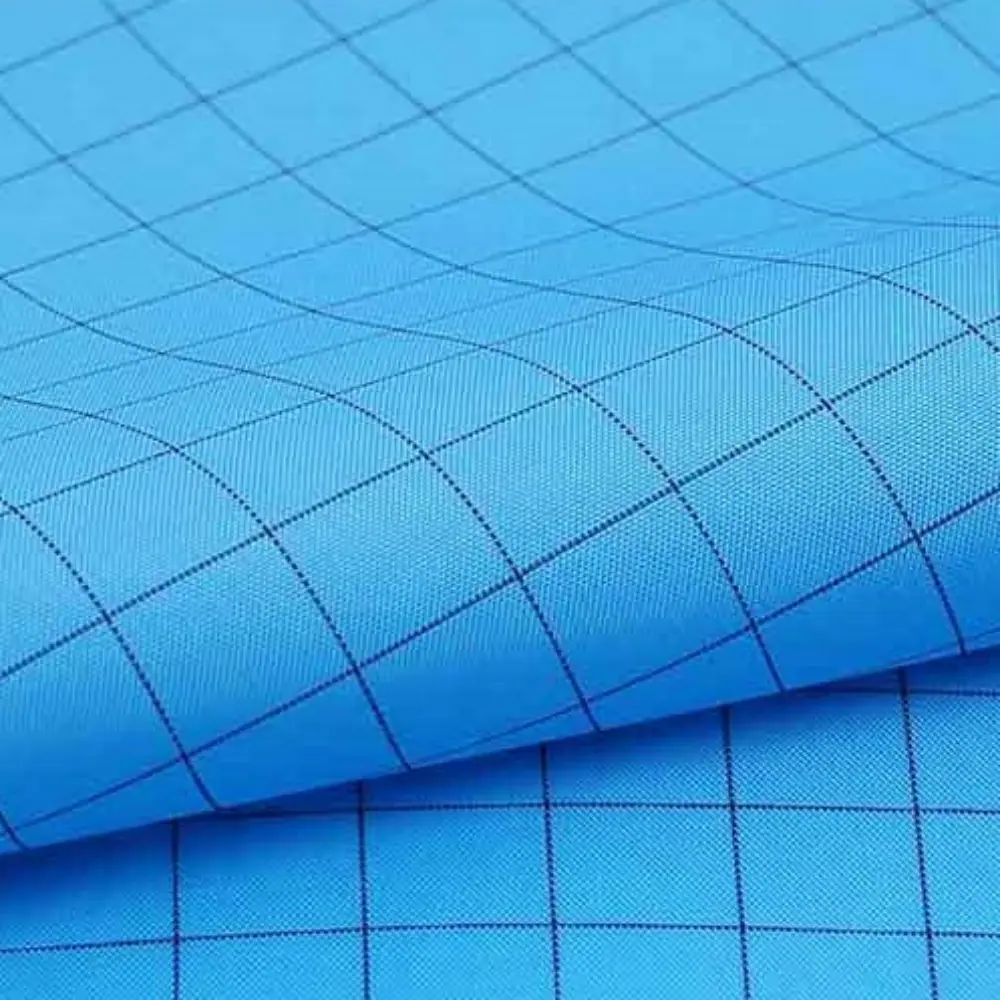
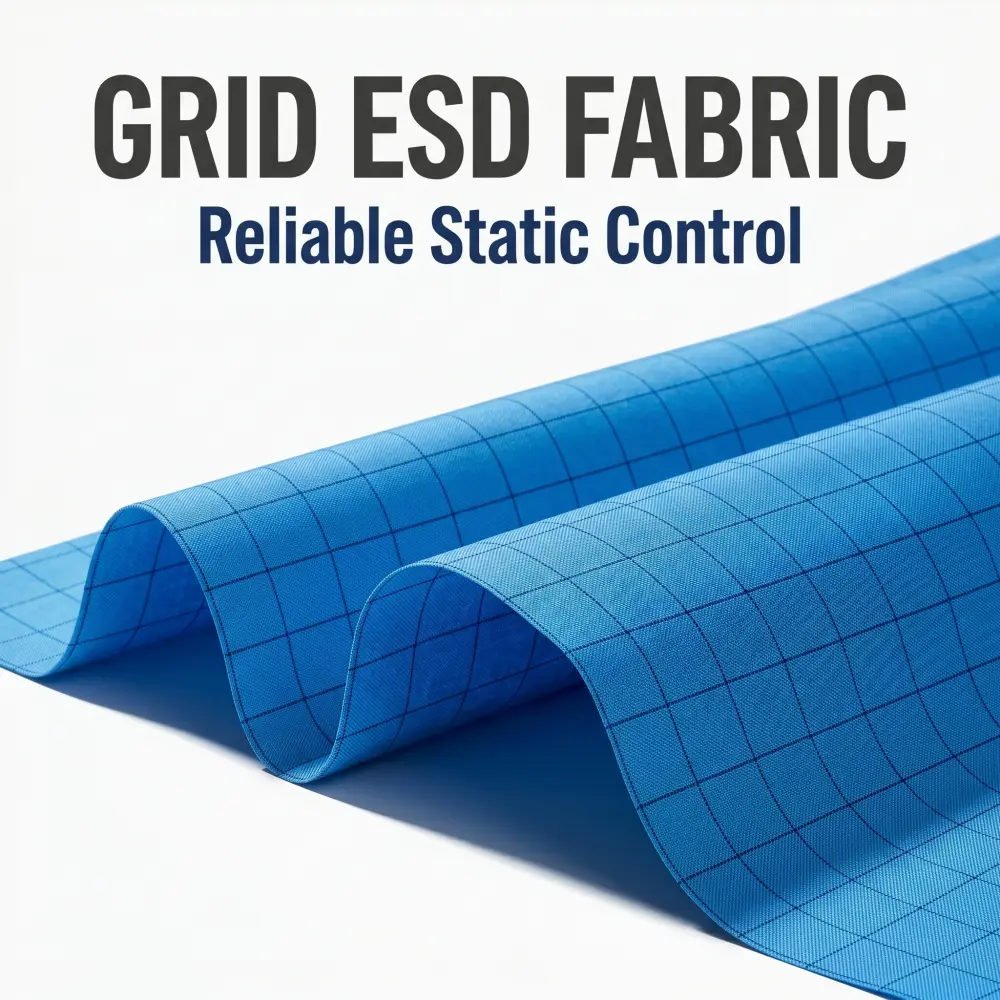
An alternative uses carbon-doped polyester multifilament yarns plied with standard polyester and woven in a defined grid. Grid spacing, commonly between 1 mm and 20 mm in both warp and weft, allows the surface resistance to be tuned to a target range. Tighter grids generally produce lower resistance, while wider spacing preserves a softer hand and more conventional textile appearance.
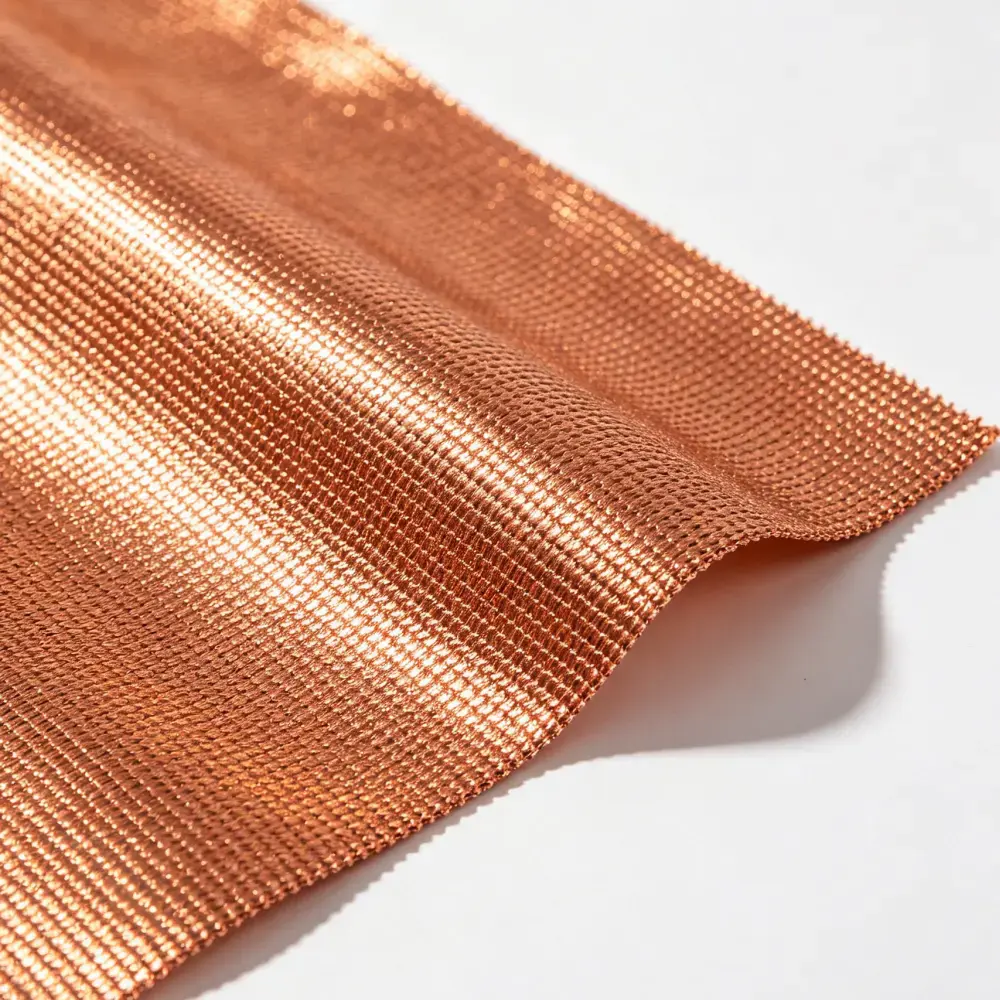
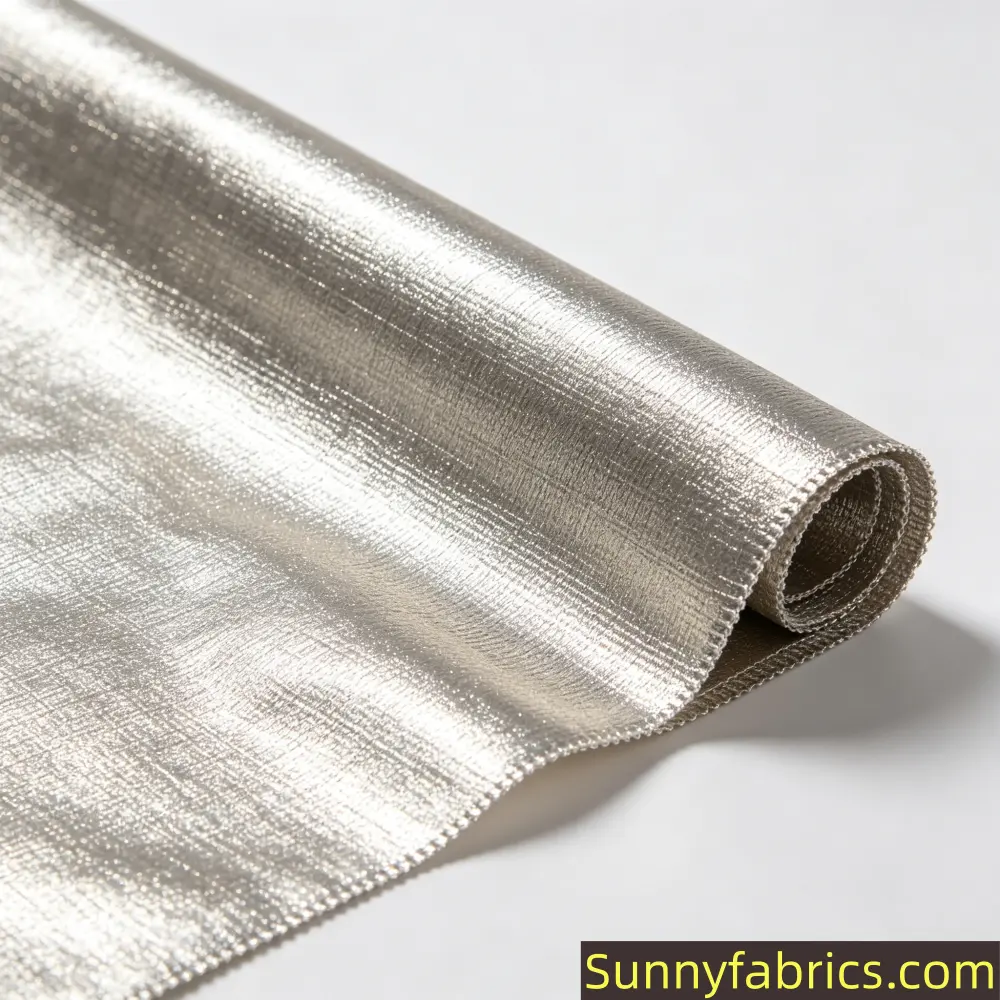
For applications requiring higher conductivity, metallised yarns using silver, copper or nickel coatings can be incorporated. These are more common in EMI shielding and RFID blocking fabric constructions, where the requirement extends beyond static dissipation to electromagnetic attenuation.
Woven, Knitted and Laminated Structures
Construction choice follows the end application:
- Woven twill and plain weave fabrics offer dimensional stability and predictable conductive pathways, making them the standard for cleanroom coveralls and industrial workwear
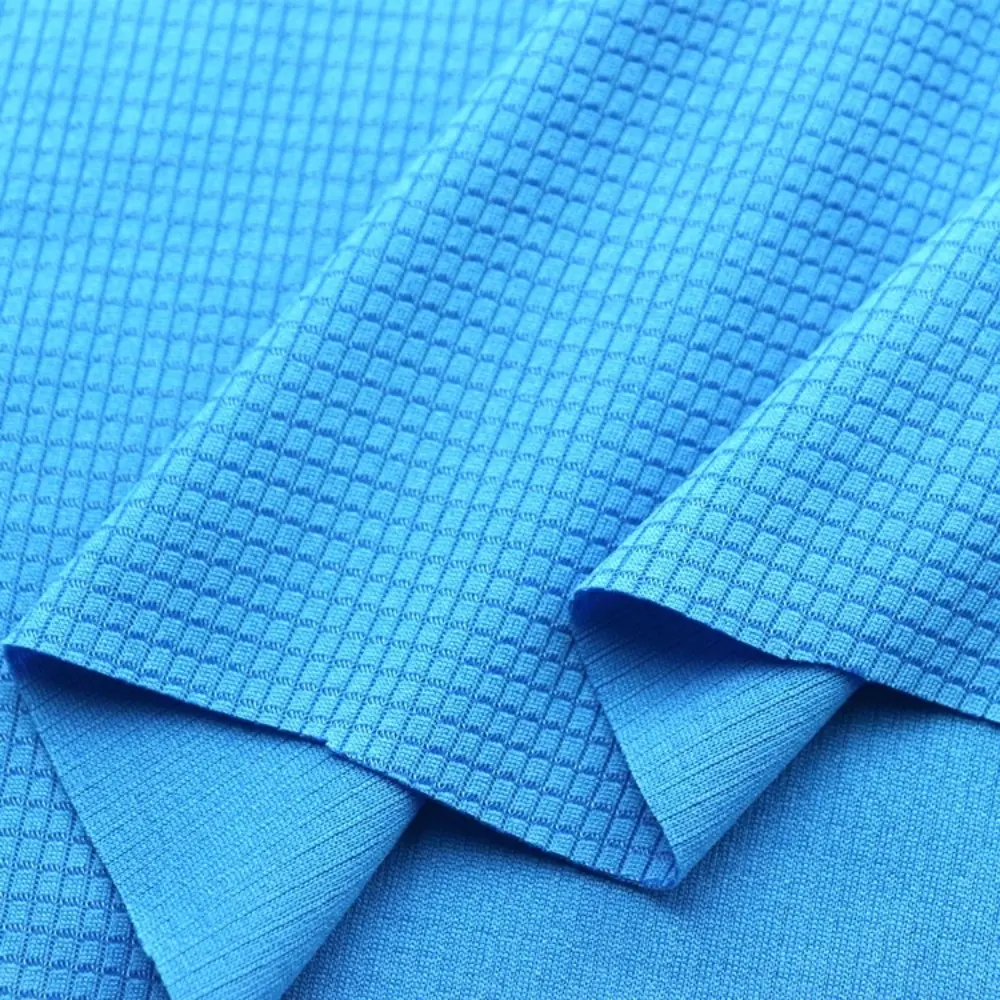
- Knitted fabrics provide elasticity and conformability, suited to close-fitting garments and accessories
- Laminated and coated variants add barrier, moisture management or chemical resistance properties while preserving electrical performance
Each construction carries trade-offs between conductivity, durability, breathability and cost. Our technical team works with buyers to identify the most appropriate balance for their target market.
Testing and Quality Verification
For B2B buyers, documented and reproducible test results are essential. A fabric that meets specification in a sample room but drifts during mass production creates warranty risk and reputational damage in the end market.
Core Test Parameters
| Parameter | Reference Standard | Typical Specification |
|---|---|---|
| Surface resistance | ASTM D257 / IEC 61340-5-1 | 10⁴–10¹¹ Ω |
| Charge decay time | IEC 61340-5-1 / MIL-STD-3010C | <2 s from 5,000 V to 10% |
| Friction voltage | GB/T 12703.1 | ≤100 V for electronic grade |
| Wash durability | AATCC 135 / JIS L0217-103 | Performance retained after 20–50 cycles |
| Electromagnetic attenuation | ASTM D4935 | Application dependent, for shielding fabrics |
Testing is conducted under controlled conditions, typically 23 ± 1°C and 50 ± 5% relative humidity, since humidity significantly affects the electrical behaviour of textile surfaces. Results obtained under uncontrolled conditions are not comparable and should be treated with caution during supplier evaluation.
Production Quality Control
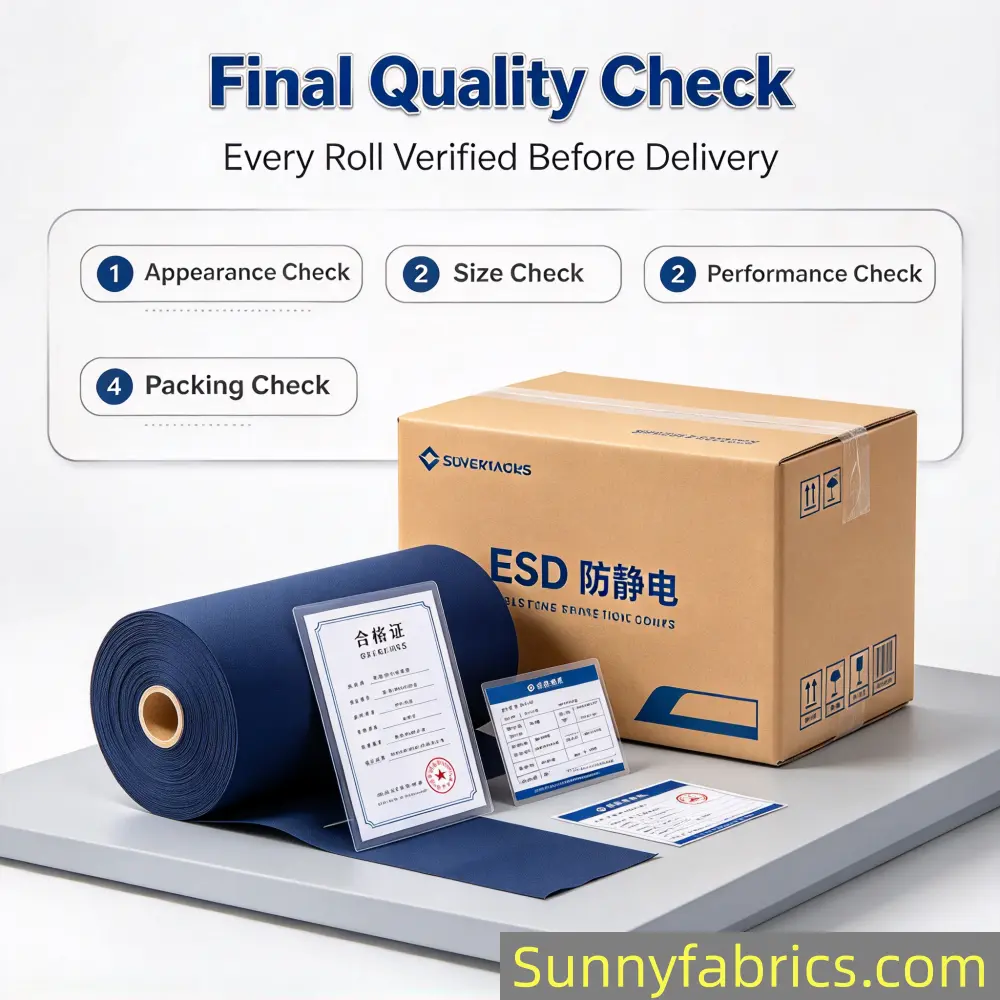
Consistency across batches requires controls at every production stage. Our processes include incoming inspection of conductive yarns, in-line monitoring of weave density and grid integrity, electrical testing of finished rolls, and retained reference samples from each production lot for traceability. For OEM and ODM projects, we supply test reports with shipment and can arrange third-party verification where the buyer’s procurement protocol requires independent confirmation.
OEM and ODM Services for International Buyers
We are a China-based factory specialising in ESD anti-static fabrics, EMI shielding fabrics and RFID blocking fabrics. Our business is built around custom manufacturing for overseas wholesalers, industrial brands, private label programmes and cross-border e-commerce sellers rather than generic stock trading.
The Two Engagement Models
OEM: The buyer provides a defined specification covering fibre composition, conductive element, weave or knit structure, weight, width, colour, surface resistance target and packaging. We manufacture to that specification and supply against agreed quality criteria. This suits buyers who have already developed a fabric specification internally or who are transferring an existing product from another supplier.
ODM: The buyer provides the application requirements and performance targets, and our technical team develops the fabric construction accordingly. We select base fibres and conductive yarns, propose a structure, produce development samples and refine the specification with the buyer until it meets the target. This suits buyers who need a functional fabric but do not maintain in-house textile engineering resources.
In both models we manage the complete production chain, from yarn sourcing and weaving or knitting through dyeing, finishing, electrical testing and export packing.
Customisation Variables
- Base fibre blend, including polyester/cotton, polyester/carbon, nylon and flame retardant variants
- Conductive element selection, from carbon-suffused acrylic to carbon-doped polyester and metallised yarns
- Fabric weight and thickness for garment, accessory or industrial applications
- Width, with 150 cm as standard and custom widths available
- Colour matching to brand palettes or stock shade selection
- Surface resistance tuning to a specified target range
- Functional finishing such as water repellency, soft hand or anti-bacterial treatment
- Roll length, core size and labelling according to buyer requirements
Applications Across Sensitive Industries
Electronics and Semiconductor Manufacturing
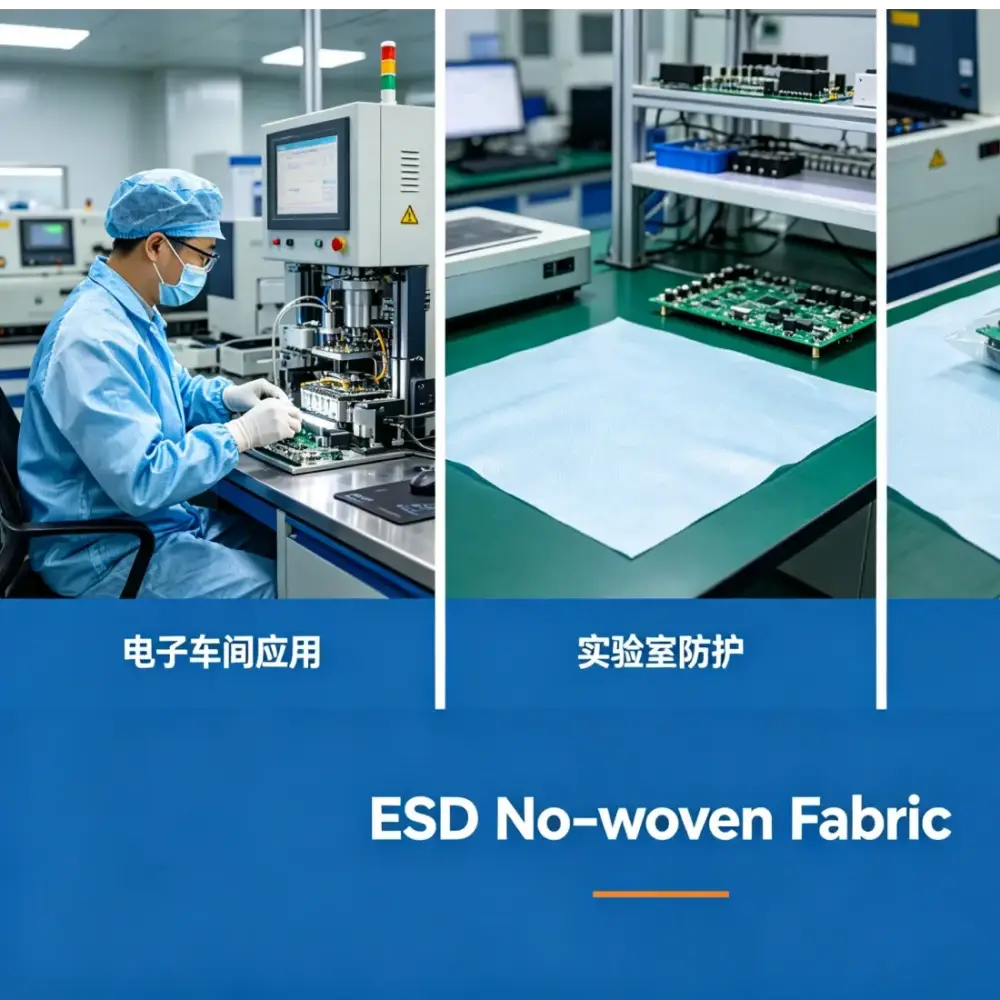
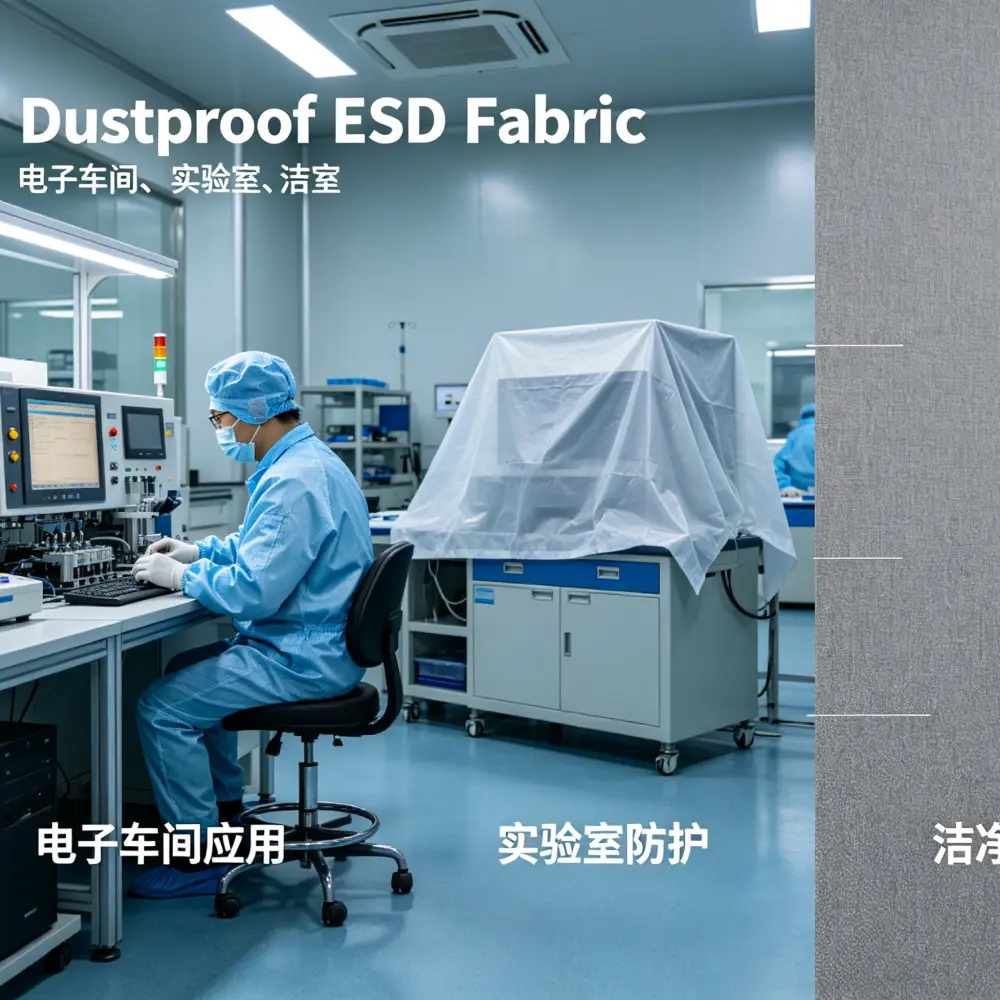
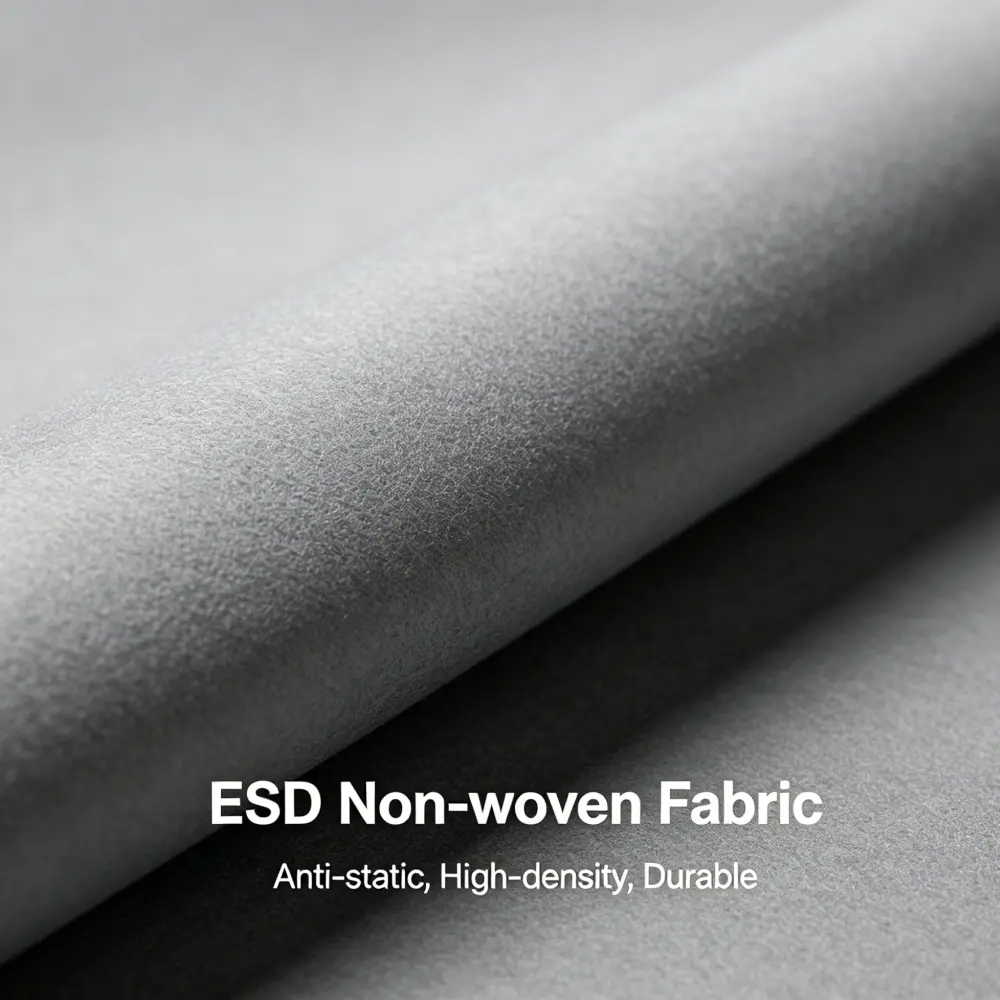
ESD garments and accessories are standard in SMT lines, PCB assembly and semiconductor fabrication. Fabrics must combine reliable charge dissipation with low particle shedding and compatibility with the cleanroom classification in use. For devices with withstand voltages below 100 V, grounded garment systems including conductive cuffs and grounding paths are typically recommended.
Cleanroom Garments and Accessories
Beyond coveralls, anti-static fabrics are used in hoods, booties, sleeve covers and gloves. These items face aggressive laundering regimes, and specifications often require charge decay performance to be maintained after fifty or more commercial wash cycles. Fabric selection must account for the laundry chemistry and handling practices of the end user.
Industrial Workwear and Hazardous Environments
In petrochemical, pharmaceutical and precision engineering settings, anti-static workwear prevents discharges that could ignite flammable atmospheres or disrupt sensitive equipment. These fabrics frequently require combined properties such as flame retardancy, chemical resistance or high visibility, and the conductive network must remain functional alongside those additional treatments.
Electromagnetic and Data Protection Applications
Conductive fabric technology extends into EMI shielding and RFID blocking products, including protective pouches, curtains, liners and enclosures. These constructions use metallised yarns or coated substrates to attenuate electromagnetic signals, and they are frequently developed as ODM projects where the buyer specifies attenuation targets and physical form factors.
Why Buyers Source from a China Fabric Factory
China remains the largest textile producer globally, with mature supply chains for technical yarns, weaving and finishing. For international B2B buyers, direct factory engagement offers several practical benefits:
- Vertical integration reduces intermediate costs and shortens lead times compared with multi-layer trading arrangements
- Specialised mills have accumulated experience in conductive textile construction that general-purpose factories may not possess
- Custom specification production is standard practice, from development samples to container volumes
- Export documentation, packaging and logistics processes are well established for international shipment
The advantage of working with a focused manufacturer rather than a general supplier lies in technical depth. Understanding why grid spacing affects resistance, how finishing chemistry interacts with conductive fibres, and how laundering degrades performance over time is what separates a reliable supply partner from a transactional vendor.
Sourcing Checklist for Procurement Teams
When evaluating suppliers of anti-static and conductive fabrics, unit price should not be the primary criterion. The following factors more accurately determine total cost of ownership:
- Specification compliance across production batches, not only in initial samples
- Wash durability verified against the laundering regime used in your market
- Availability of batch-level test documentation traceable to production lots
- Technical responsiveness and engineering support for custom development
- Realistic and reliable lead times from order confirmation to shipment
- Packaging and labelling suited to your distribution or e-commerce requirements
For ODM projects, involving the manufacturer early in specification development reduces the risk of mismatches between fabric performance and garment construction, particularly where grounding paths, seam construction or cuff design affect overall system performance.
Frequently Asked Questions
What is the difference between anti-static and conductive fabric?
Anti-static or static dissipative fabrics generally have surface resistance between 10⁴ and 10¹¹ Ω and allow controlled charge dissipation. Conductive fabrics have lower resistance, often below 10⁴ Ω, and support faster or more complete charge transfer. Conductive constructions are also used for electromagnetic shielding. The correct choice depends on the sensitivity of the components being protected and the requirements of the ESD control programme.
How many wash cycles can ESD fabrics withstand?
Durability depends on construction and finishing. Many cleanroom specifications require performance retention after 20 to 50 industrial wash cycles. We test to the buyer’s stated laundering regime and can advise on fabric options that balance durability against cost.
Do you supply fabric samples before bulk orders?
Yes. For OEM and ODM enquiries we provide samples for evaluation. Whether the request is for a stock fabric swatch or a custom-developed construction, we confirm sample lead time and any applicable charges before proceeding.
Can you support both small trial orders and volume production?
We support development quantities through to container-volume production. Order minimums vary by construction and customisation level, and we discuss these transparently during the quotation stage.
Which standards can you test against?
Depending on the fabric and application, we provide test data referencing IEC 61340-5-1, ASTM D257, ASTM D4935, AATCC 135 and related standards. Where independent verification is required, we can arrange third-party testing to the buyer’s specification.
Start Your OEM or ODM Fabric Project
Whether you are developing a cleanroom garment range, sourcing anti-static workwear for industrial distribution, or exploring conductive textiles for EMI shielding and RFID blocking products, our technical team can translate your requirements into a production-ready specification.
We invite international buyers to contact us with project details including target surface resistance, application environment, fabric weight and width preferences, colour requirements and expected order volumes. From development samples through to container shipment, we support the full sourcing cycle for ESD anti-static fabrics, EMI shielding fabrics and RFID blocking fabrics.
Visit sunnyfabrics.com to submit an enquiry or request a sample kit.
Recent Comments
Latest blogs


Share your thoughts
All fields marked with an asterisk() are required