Sunny Fabrics | Conductive Foam, Tape & EMI Shielding Can Manufacturer
- We specialize in the design and manufacturing of conductive foam, conductive tape, EMI shielding cans and functional fabrics.
- We specialize in the design and manufacturing of conductive foam, conductive tape, EMI shielding cans and functional fabrics. Our R&D and production team supports customized programmes from material specification through to the delivered part.
1. Customized Product Solutions
- Material and formulation customization to meet different performance requirements
- Thickness, weight and dimension tailored to specific applications
- Functional treatment for ESD, EMI, grounding or RFID targets
- Custom width and density to optimize production efficiency
- Application-specific engineering support from sample to mass production

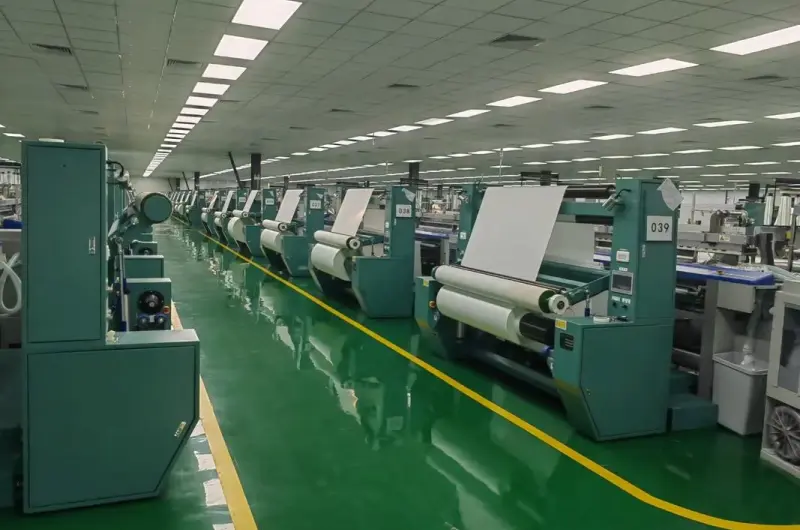
2. OEM and ODM Services
- Customized logo and label printing for brand identification
- Packaging design to upgrade product and brand value
- Specification and structure development for various applications
- Functional formula development for stable and reliable performance
- In-house tooling and converting support for custom part formats
Conductive Foam Sheets & Strips Manufacturer
Conductive foam sheets and strips are functional materials developed for applications where electrical conductivity, cushioning, flexibility and material adaptability are required. They are used in electronic manufacturing, communication equipment, electrical enclosures, electronic component packaging and various industrial applications. Compared with conventional cushioning foam, conductive foam incorporates an electrically conductive structure or treatment that provides electrical properties suitable for specific shielding, grounding, static-control or contact applications.
Sunny Fabrics supplies conductive foam materials for B2B customers seeking flexible material formats and customized supply solutions. Available product formats may include sheets, rolls, strips and cut pieces, depending on the material grade and production requirements. Buyers can evaluate different material constructions, thicknesses, dimensions and mechanical characteristics according to their application requirements.
As a material supplier serving industrial and manufacturing customers, we understand that conductive foam selection involves more than simply choosing a thickness or shape. Electrical resistance, compression behavior, recovery, surface characteristics, dimensional consistency and compatibility with the final assembly can all influence product performance. A suitable material specification should therefore be established according to the intended application rather than relying on a general product description.
Our conductive foam supply solutions are intended for electronics manufacturers, EMI shielding material distributors, industrial component suppliers, OEM manufacturers and engineering procurement teams. Whether a customer needs standard material formats for internal processing or customized sheets and strips for a specific production program, the material requirements can be reviewed according to the intended use, processing method and expected order volume.
1. Introduction to Conductive Foam Sheets and Strips
Conductive foam is a broad category of functional foam materials designed to provide electrical conductivity in addition to the physical characteristics associated with foam. Depending on the product construction, conductivity may be achieved through a conductive surface treatment, a conductive coating, conductive particles or another material structure. The specific mechanism varies between product grades, so buyers should confirm the construction and electrical properties of the selected material before placing a production order.
Conductive foam sheets are generally supplied as flat material sections. They can be used as a starting material for cutting, laminating, converting or other downstream manufacturing operations. Conductive foam strips are narrower material formats that can be produced through slitting or cutting, subject to the dimensions and tolerances supported by the selected grade. Rolls may also be suitable for customers who require continuous material for automated or semi-automated processing.
The main advantage of sheet and strip formats is their flexibility in downstream manufacturing. Instead of purchasing only a finished component, a converter or OEM manufacturer can source material in a form that matches its own production workflow. This may reduce unnecessary processing steps and give engineering teams greater control over the final dimensions and assembly design.
Conductive foam should not be treated as one universal material with identical electrical and mechanical properties. Different foam substrates, conductive treatments and manufacturing methods can result in different performance characteristics. For this reason, a technical datasheet and representative sample are important when selecting a material for a new application.
For B2B purchasing, the first step is to define the required function. Some projects prioritize electrical contact and grounding. Others focus on static-control requirements, protective packaging or the use of conductive material within an electronic assembly. The correct material format and specification depend on the actual function, the surrounding components and the conditions under which the material will be used.
2. Types of Conductive Foam Products
2.1 Conductive Foam Sheets
Conductive foam sheets are flat material formats supplied in specified thicknesses, widths and lengths. They are suitable for customers who need a flexible starting material for their own cutting, converting or assembly processes. Sheet formats can be useful for prototype development, small-batch manufacturing and production environments where individual components are cut from larger material sections.
When purchasing conductive foam sheets, buyers should consider the usable sheet area, thickness consistency, edge condition, surface quality and dimensional tolerance. These factors can affect material utilization and the repeatability of downstream processing. For applications involving multiple components cut from one sheet, consistent dimensions can also help improve production planning.
Sheet materials may be supplied in different sizes depending on the product construction and manufacturing capability. Before confirming an order, customers should provide the required dimensions and explain whether the material will be cut manually, processed with a cutting machine or used in another converting operation.
2.2 Conductive Foam Rolls
Conductive foam rolls are designed for customers who prefer continuous material rather than separate sheets. Roll formats can support repeated cutting operations and may be suitable for manufacturing processes that use slitting, feeding or automated material handling. The practical advantages depend on the foam's flexibility, thickness, surface condition and ability to maintain its shape during handling.
Roll specifications generally include material width, roll length, thickness and winding requirements. Customers should also consider the roll's outside diameter, core requirements and packaging method when these details affect transportation or production equipment compatibility. These requirements should be reviewed before mass production, especially when the material will be installed on an existing converting line.
Not every conductive foam grade is suitable for roll supply. Some materials may have limitations related to thickness, flexibility, surface treatment or handling. A supplier should confirm whether the requested material can be produced and delivered in roll form without compromising its intended characteristics.
2.3 Conductive Foam Strips
Conductive foam strips are narrow material sections supplied in specific widths and lengths. They can be used as intermediate materials in electronic manufacturing, component assembly and other industrial processes. Strip formats are useful when a customer needs consistent material dimensions and wants to reduce additional slitting or cutting operations at its own facility.
Strip width, thickness and length are important purchasing specifications. For applications that require accurate positioning or repeatable assembly, dimensional tolerances should be agreed upon before production. Buyers should also explain whether the strips will be handled manually, placed by machinery or integrated into a continuous production process.
Depending on the material grade, strips may be supplied as individual pieces or arranged in a packaging format that supports convenient handling. The final format should be selected according to the customer's production method, storage conditions and delivery requirements.
2.4 Custom Conductive Foam Pads and Cut Pieces
Some customers need conductive foam material in predetermined dimensions rather than large sheets or rolls. Custom cut pieces can be prepared according to drawings, samples or dimensional specifications, subject to the processing capability of the selected material. This option may be useful for prototype programs, component manufacturers and OEM customers that want to receive material closer to its intended production size.
When requesting custom pieces, customers should provide a drawing or clear dimensional specification. Important details may include length, width, thickness, corner requirements, quantity per package and dimensional tolerance. If the part includes a special outline or multiple processing steps, an engineering review may be needed before a quotation can be confirmed.
3. Conductive Foam Material Construction
The construction of conductive foam determines many of its electrical, mechanical and processing characteristics. A typical product combines a foam substrate with a conductive structure or treatment. However, the exact construction is not identical across all conductive foam products. Buyers should therefore request product-specific information instead of assuming that every grade uses the same base material or conductivity mechanism.
3.1 Foam Substrate
The foam substrate provides the physical foundation of the material. Its properties may influence flexibility, compressibility, density, thickness stability and recovery after deformation. Different substrate types can behave differently under pressure and during repeated handling. The choice should be based on the mechanical demands of the application and the requirements of the downstream manufacturing process.
For example, a project involving frequent compression may require a material with suitable recovery characteristics. A project that involves cutting into small sections may place greater importance on dimensional stability and clean processing edges. Where the material is used in a compact electronic assembly, available thickness and compression behavior may be important design considerations.
3.2 Conductive Structure or Treatment
Electrical conductivity can be introduced through different material technologies. Depending on the product, the conductive function may be associated primarily with the surface or may be incorporated into another part of the material structure. Surface-treated and internally conductive materials should not be assumed to perform identically.
The conductive structure can influence surface resistance, electrical contact behavior, flexibility and durability. It may also affect how the material responds to cutting, bending, compression or repeated handling. Customers should identify the electrical requirement of the application and request the relevant test information for the exact grade under consideration.
3.3 Surface Characteristics
Surface characteristics can be important when conductive foam is used in contact with electronic components or other materials. Surface texture, coating condition, uniformity and resistance to handling can influence assembly quality. For some applications, the contact surface must remain consistent across the material area. For others, the main requirement may be that the material can be processed without excessive damage.
Buyers should explain whether the foam will contact metal surfaces, plastic components, circuit assemblies or other materials. This information helps determine which surface characteristics should be reviewed during sample evaluation. It is also useful to confirm whether the product requires a specific orientation during processing or installation.
3.4 Material Grade Confirmation
Because conductive foam is a broad material category, the product grade should be identified clearly in all technical and purchasing documents. A complete specification may include the foam substrate, conductive treatment or construction, nominal thickness, dimensions, electrical resistance requirements and mechanical characteristics.
If a project has strict performance requirements, a general description such as conductive foam sheet may not be sufficient for procurement. The buyer and supplier should establish a common technical specification that identifies the material being sampled, tested and ordered. This helps prevent confusion between visually similar materials with different electrical or mechanical properties.
4. Conductive Foam Manufacturing Technologies
Conductive foam products can be manufactured using different material preparation and treatment technologies. The appropriate method depends on the substrate, required electrical properties, intended product format and production requirements. Since different suppliers may use different constructions, buyers should confirm the actual technology used for the specific grade rather than relying on a general category name.
4.1 Conductive Surface Treatment
Some conductive foam materials use a surface treatment to introduce electrical properties. In these products, the conductive function is associated with the treated surface. The consistency of the treatment may influence electrical measurements and the material's suitability for contact-related applications.
For this type of material, sample inspection should include a review of the surface condition and the relevant electrical test results. Customers should also consider how the surface may respond to slitting, cutting, bending and normal handling. If the material will be processed after delivery, it is important to establish whether the intended process could damage the conductive surface.
4.2 Conductive Coating or Layer
Other conductive foam constructions may use a conductive coating or layer as part of the material structure. The coating or layer may be designed to provide electrical functionality while maintaining the flexibility required for the application. The actual performance depends on the formulation, substrate compatibility and manufacturing control.
When evaluating this type of material, buyers may request information about the conductive layer, its coverage and the relevant resistance test method. They should also ask whether the material has been evaluated after the processing steps that are likely to occur during their own production.
4.3 Conductive Components Within the Material
Some foam materials may incorporate conductive components into their structure. The distribution and characteristics of these components can influence the electrical behavior of the finished material. This type of construction should be evaluated according to its own datasheet and test results.
It is important not to assume that surface resistance, volume resistance and other electrical measurements are interchangeable. They describe different aspects of material behavior and may be relevant to different applications. A technical specification should state which property is being measured and how the measurement is performed.
4.4 Converting and Finishing Processes
After the base material is prepared, it may be converted into sheets, rolls, strips or custom cut pieces. Common converting requirements include slitting, trimming, sheet cutting, dimensional inspection and packaging. Additional operations may be possible depending on the material grade and production setup.
For OEM projects, the converting process should be reviewed together with the final dimensions. A material that performs well in a large sheet may require additional evaluation after it has been cut into narrow strips or smaller components. Edge quality, dimensional consistency and the condition of the conductive surface should be checked where relevant.
5. Available Thickness and Dimensions
Thickness and dimensions are among the first specifications buyers should define when sourcing conductive foam sheets and strips. The required size depends on the available installation space, the mechanical function of the material and the processing method used by the customer. A suitable thickness should be selected through engineering evaluation rather than by choosing the thickest or softest available material.
5.1 Material Thickness
Conductive foam may be available in different thickness options depending on the product construction. Thickness affects the amount of material available for compression, the physical space occupied in an assembly and the overall handling characteristics. In applications where the material is compressed during installation, thickness should be considered together with compression behavior and the final assembly gap.
Customers should distinguish between nominal thickness and actual measured thickness. Foam materials may show variation depending on measurement pressure, conditioning and testing method. For accurate comparison, the supplier and buyer should agree on the measurement procedure and acceptable tolerance.
5.2 Sheet Dimensions
Sheet dimensions should be selected according to the customer's cutting plan and material utilization requirements. Larger sheets may reduce the number of individual material pieces required for handling, while smaller formats may be more convenient for sample evaluation or limited production. The most appropriate size depends on the available production equipment and the dimensions of the components being manufactured.
When requesting a quotation, buyers should provide the required sheet length and width, nominal thickness, expected quantity and any special dimensional tolerance. If the sheet will be cut into multiple parts, a cutting layout or approximate component size can help the supplier understand the intended material usage.
5.3 Strip Width and Length
Strip dimensions should be defined according to the final application or the customer's converting process. Narrow strips may require closer control of cutting accuracy and edge condition. Longer strips may require appropriate packaging to prevent unnecessary bending, deformation or handling damage during transportation.
Where strips are supplied in continuous lengths, buyers should specify the preferred roll format and any requirements related to winding direction, core size or packaging. Where strips are supplied as individual pieces, the order specification should state the piece length and quantity per package.
5.4 Dimensional Tolerances
Dimensional tolerance is important for repeatable manufacturing. Excessive variation in thickness, width or length may affect the customer's material utilization, assembly fit or production efficiency. The appropriate tolerance depends on the material properties, production method and application requirements.
For new projects, it is advisable to define critical dimensions separately from non-critical dimensions. This allows quality-control resources to focus on the measurements that have the greatest impact on the finished product. Tolerance requirements should be realistic and confirmed against the capabilities of the selected material and converting process.
6. Electrical Properties of Conductive Foam
Electrical properties are central to the selection of conductive foam. However, different applications require different electrical characteristics, and no single resistance value can describe every aspect of performance. Buyers should identify the purpose of the material and specify the electrical measurement that is relevant to that purpose.
6.1 Surface Resistance
Surface resistance describes the electrical resistance measured along or across a material surface under a defined test method. It can be relevant when the conductive function is associated with the surface treatment or when electrical contact is made through the material surface.
When comparing suppliers, buyers should request the surface resistance range and the test method used. Measurement conditions, electrode configuration and sample preparation can affect the reported result. Therefore, resistance values from different datasheets should not be compared without checking whether the test methods are equivalent.
6.2 Volume Resistance
Volume resistance relates to electrical resistance through the body of a material. It may be relevant for certain conductive foam constructions, but it should not be confused with surface resistance. A material can have different surface and volume electrical characteristics depending on how its conductive function is created.
If the application requires current to pass through the material thickness, the buyer should confirm whether the selected grade is designed for that type of electrical behavior. A surface resistance result alone may not establish suitability for a through-thickness electrical requirement.
6.3 Electrical Contact Performance
In some assemblies, conductive foam is expected to establish or maintain an electrical contact between adjacent components. Contact performance may depend on the material surface, applied pressure, contact area, assembly geometry and the characteristics of the surfaces being connected.
For these applications, material resistance testing may be only one part of the evaluation. Customers may also need to assess the material within a representative assembly to determine whether the contact remains stable under the actual installation conditions.
6.4 Conductivity and Application Requirements
Conductivity requirements should be linked to a clearly defined application. A material selected for static-control packaging may have different requirements from one intended for electrical contact in an electronic assembly. Similarly, a material used as part of an EMI shielding design may need to be evaluated as part of the complete shielding structure.
Conductive foam should not automatically be considered an EMI shielding solution simply because it has an electrical resistance value. Shielding effectiveness depends on the complete material system, frequency range, geometry, contact conditions and installation design. Where EMI performance is critical, customers should request relevant test evidence and evaluate the material in the intended configuration.
7. Mechanical Properties and Compression Performance
Mechanical characteristics determine how conductive foam behaves during handling, processing and use. A material may have suitable electrical properties but still be unsuitable for a particular application if its compression behavior, recovery or dimensional stability does not match the assembly requirements.
7.1 Density
Density is one factor used to characterize foam materials. It can influence material weight, handling and mechanical behavior, although density alone does not fully determine hardness or compression performance. Buyers should review density together with other mechanical data rather than using it as the only selection criterion.
For projects that require repeatable production, density consistency may be relevant to incoming quality control. If the customer has a defined density range, the measurement method and acceptable tolerance should be agreed upon before mass production.
7.2 Hardness and Compression Force
Hardness and compression force describe different aspects of how a foam responds to mechanical loading. Hardness measurements may provide an indication of material firmness under a specified test method, while compression force relates to the force required to compress the material by a defined amount.
In a compact assembly, the force required to compress the material can influence the mechanical load applied to nearby components. A material that is too firm may create excessive pressure, while a material that is too soft may not provide the required support or contact. The correct balance should be determined through application testing.
7.3 Compression and Recovery
Compression behavior is important when conductive foam is installed in a space where it will be compressed. The amount of compression and the material's ability to recover after unloading can affect long-term dimensional behavior. Different foam constructions may respond differently to repeated compression.
Customers should define the expected compression range and operating conditions. Where the material will be compressed repeatedly, testing should consider the number of cycles and the extent of deformation relevant to the application. A single initial compression measurement may not fully represent long-term behavior.
7.4 Flexibility and Handling
Flexibility affects how easily sheets and strips can be handled, cut, positioned and installed. A flexible material may be easier to fit into certain assemblies, while a material with greater dimensional stability may be more suitable for specific converting operations. The best choice depends on the manufacturing process and the intended use.
During sample evaluation, buyers should inspect whether the material bends, folds or deforms in a way that affects processing. They should also check whether the material returns to an acceptable shape after normal handling and whether the conductive surface remains in suitable condition.
7.5 Environmental and Service Conditions
Operating temperature, humidity, exposure to chemicals and storage conditions can affect foam materials. The degree of influence depends on the substrate and conductive construction. Buyers should identify any unusual environmental conditions before selecting a grade.
Where the product will be used in demanding environments, application-specific testing may be necessary. The supplier should provide available product information, while the buyer should confirm that the selected material meets the actual requirements of the finished assembly.
8. Conductive Foam vs. Conventional Foam
Conventional foam is commonly used for cushioning, spacing, vibration management and protective packaging. Its primary function is usually mechanical rather than electrical. Conductive foam is different because it is designed to provide electrical properties in addition to the physical characteristics of the foam substrate.
The main distinction is not necessarily the appearance or shape of the material. Two foam products may look similar but have very different electrical properties. A conventional foam sheet should not be assumed to provide conductivity, grounding or static-control functionality unless its electrical characteristics have been specifically established.
When comparing conductive foam with conventional foam, purchasing teams should review the following factors:
- Whether the material has a defined conductive construction or treatment.
- Whether surface resistance, volume resistance or another electrical property is specified.
- Whether the mechanical characteristics meet the application's compression and flexibility requirements.
- Whether the material is compatible with the customer's cutting and converting processes.
- Whether the supplier can provide consistent material specifications and relevant test information.
- Whether the total material cost is appropriate for the intended production volume.
For some projects, conventional foam may be sufficient because the application only requires cushioning or spacing. For other projects, conductive foam may be necessary because electrical properties are part of the product design. The selection should be based on the function of the material rather than the assumption that conductive foam is always a better replacement for standard foam.
9. Conductive Foam vs. Fabric Over Foam
Conductive foam sheets and strips are material formats intended for further processing or direct use according to the selected grade. Fabric over foam EMI gaskets, by contrast, are more specifically designed as finished or semi-finished gasket constructions in which a conductive fabric is combined with a foam core.
The two product categories can serve related purposes in electronic and EMI-related applications, but they should not be treated as identical products. Conductive foam material selection focuses on the foam construction, electrical properties, thickness, dimensions and converting requirements. Fabric over foam gasket selection places greater emphasis on the combined fabric-and-foam construction, gasket dimensions and the requirements of the installation interface.
For OEM buyers, the distinction is important when preparing a technical specification. If the project requires a general conductive foam material for internal processing, sheets, rolls or strips may be the appropriate starting point. If the project requires a specific gasket component with a conductive fabric surface and compressible core, a finished gasket category may be more suitable.
Where the intended application is uncertain, customers can provide an assembly drawing or describe the material's role in the product. This allows the supplier to review whether a conductive foam sheet, strip, converted component or another construction is more appropriate.
10. EMI and ESD Applications
Conductive foam may be considered for applications involving electromagnetic compatibility, electrical contact or electrostatic control. However, EMI shielding and ESD control are different technical objectives. The material specification and test method should match the intended function.
10.1 EMI-Related Applications
In an EMI-related design, conductive materials may be used as part of an electrical contact path or shielding structure. Conductive foam can be considered where its mechanical and electrical characteristics are compatible with the design. Its actual contribution to shielding performance depends on the complete assembly, including contact geometry, enclosure construction, frequency range and installation conditions.
For this reason, a resistance value should not be treated as proof of a particular shielding effectiveness in decibels. If a project requires a defined shielding performance, buyers should request relevant test data and clarify whether the data applies to the raw material, a specific test fixture or a complete finished assembly.
Engineering teams should also consider the relationship between material compression and electrical contact. If the foam is expected to bridge a gap or maintain contact between surfaces, the installed compression range and contact area may influence the overall result.
10.2 ESD and Static-Control Applications
Electrostatic discharge control is concerned with managing electrostatic charge and reducing the risk of uncontrolled discharge. Conductive or static-control foam may be used in selected packaging, handling and component-protection applications. The required electrical range depends on the protection strategy and the sensitivity of the electronic components.
Buyers should distinguish between conductive, dissipative and insulating material categories when specifying packaging or handling materials. These categories are not interchangeable, and the correct classification should be supported by appropriate test results. A material that is suitable for one static-control purpose may not be suitable for another.
10.3 Grounding and Electrical Contact
Some electronic assemblies use conductive foam as part of a grounding or electrical contact arrangement. In these applications, the material's electrical behavior must be considered together with the contact surfaces and assembly pressure. The material should be evaluated in a representative configuration to confirm that the intended electrical path can be achieved.
10.4 Application-Specific Validation
For both EMI-related and ESD-related projects, the buyer should define the intended function before requesting a material quotation. Useful information includes the target electrical property, operating environment, installation method, material dimensions and any applicable industry or customer-specific requirements.
When the project involves strict performance targets, material samples should be tested using an agreed method. If necessary, the final component or assembly should also be evaluated because raw material measurements alone may not establish the performance of the complete product.
11. Applications in Electronic Manufacturing
Conductive foam sheets and strips can support a range of electronic manufacturing processes. Their suitability depends on the material grade, electrical requirements and mechanical conditions of the application. The following examples illustrate potential application areas rather than guaranteeing that one material grade is suitable for every product in these industries.
11.1 Electronic Enclosures
Electronic enclosures may contain multiple components that require electrical contact, spacing or material support. Conductive foam may be considered in selected designs where its thickness, compression behavior and electrical characteristics meet the assembly requirements.
For enclosure-related applications, buyers should provide the available installation space, required contact area and expected compression. Engineering teams should also review the enclosure surface and the location of the material within the overall design.
11.2 Communication Equipment
Communication equipment often contains compact electronic assemblies with defined electrical and mechanical requirements. Conductive foam materials may be evaluated for selected contact, shielding-related or static-control functions. The suitability of a grade depends on the equipment design and the applicable performance requirements.
For communication equipment programs, material consistency is important because production may involve repeated assemblies and multiple component sizes. Buyers should define the material specification and inspection requirements early in the project to support repeatable procurement.
11.3 PCB and Electronic Component Manufacturing
Printed circuit boards and electronic components may require specialized materials during manufacturing, handling or assembly. Conductive foam may be considered for specific applications where the electrical behavior and mechanical characteristics are appropriate. It should not be used as a substitute for a purpose-designed component protection system without technical validation.
When sourcing material for PCB-related processes, buyers should explain whether the foam will contact the board directly, support a fixture, provide a contact function or be used in another way. This information helps identify potential concerns related to surface condition, pressure and electrical properties.
11.4 Industrial Control Equipment
Industrial control products may contain electronic modules, metal housings, connectors and other components arranged in compact spaces. Conductive foam materials can be evaluated for selected electrical contact or material-management applications. The correct grade should be chosen according to the environmental and mechanical conditions of the equipment.
11.5 Electronic Packaging and Handling
Some conductive foam grades may be used in packaging or handling systems where electrical properties are required in addition to cushioning. The exact application may involve component storage, transfer or protection during manufacturing. The material classification and resistance range should be confirmed according to the customer's static-control requirements.
11.6 OEM Electronic Assemblies
OEM manufacturers often need materials that can be integrated into a specific product design. Conductive foam sheets and strips provide a flexible starting point for internal processing or customized component preparation. The purchasing specification should include the material grade, dimensions, electrical requirements, mechanical properties and expected order volume.
12. Custom Converting and Processing Services
Many B2B customers require conductive foam in a format that fits their own production process. Custom converting can help transform larger material formats into sheets, strips or cut pieces with defined dimensions. The available operations depend on the material construction, thickness and required accuracy.
12.1 Slitting
Slitting is used to divide wider material into narrower strips. It may be suitable for customers who require consistent strip widths or need material in a format that can be fed into their own production equipment. Slitting requirements should include target width, tolerance, material thickness and preferred packaging.
For narrow strips, buyers should consider edge quality and dimensional consistency. If the conductive function is associated with the surface, the slitting process should also be evaluated to determine whether the finished edges or exposed surfaces create any application concerns.
12.2 Sheet Cutting
Sheet cutting converts larger material formats into specified rectangular or other manageable sections. This operation can support customers who want to receive material in predefined sheet sizes. The cutting plan should be based on the dimensions of the incoming material and the customer's downstream processing requirements.
When requesting sheet cutting, buyers should provide the required length, width, quantity and tolerance. If the sheets will be used in automated equipment, packaging and dimensional consistency may need additional attention.
12.3 Custom Die Cutting
For projects that require components with a specific outline, die cutting may be considered where the material and production volume support the process. The feasibility of die cutting depends on the foam construction, thickness, design complexity and required edge quality.
Customers should provide a technical drawing or sample with clearly defined dimensions. Any critical features, cutout areas or special tolerances should be identified before tooling or production arrangements are confirmed.
12.4 Lamination and Additional Processing
Some projects may require the conductive foam to be combined with another material or supplied with an additional functional layer. Lamination or other secondary processing may be possible depending on the material grade and compatibility requirements. These operations should be evaluated individually rather than assumed to be available for every product.
When requesting a laminated construction, buyers should identify the additional material, bonding requirements, intended use and any restrictions on thickness or flexibility. A sample evaluation can help confirm whether the combined material meets the processing and performance requirements.
12.5 Customized Packaging
Packaging requirements can influence material handling and delivery efficiency. Sheets may require flat packaging, while strips or rolls may need a format that prevents unnecessary deformation during transportation. For OEM programs, customers may also request labels, batch identification or packaging information that supports warehouse management.
Packaging specifications should be agreed upon before mass production. Buyers should explain how the material will be stored, transported and used after delivery so that the packaging method can be selected accordingly.
13. How to Select Conductive Foam Sheets and Strips
Selecting the right conductive foam material requires a structured review of the application's electrical, mechanical and dimensional requirements. A product description alone is not enough to establish suitability. Engineering and purchasing teams should work together to define the most important parameters before comparing suppliers.
13.1 Define the Primary Function
Start by identifying what the material needs to do. Is it intended for electrical contact, grounding, static control, shielding-related use, cushioning or a combination of functions? The primary function determines which technical properties should receive the greatest attention.
If the project has an EMI shielding requirement, clarify whether the foam is intended to contribute to an electrical contact path or to serve another role within the shielding design. If the project concerns ESD control, identify the required material classification and electrical range. These objectives require different evaluation methods.
13.2 Identify the Material Format
Choose between sheets, rolls, strips or custom cut pieces according to the customer's production workflow. Sheets may be appropriate for batch cutting, while rolls may be more convenient for continuous converting. Strips can reduce additional processing when a defined width is required.
The format should also be compatible with storage, transportation and production equipment. For example, a roll specification may need to include core dimensions and winding details, while a sheet specification may focus on usable area and flatness.
13.3 Confirm Electrical Requirements
Electrical requirements should be written in measurable terms wherever possible. Buyers should specify whether surface resistance, volume resistance, electrical contact behavior or another property is required. The measurement method and acceptable range should be agreed upon to make supplier comparisons meaningful.
For projects with a defined shielding target, the buyer should identify the required test method and frequency range. A general conductivity statement is not a substitute for shielding effectiveness test data. Where the finished assembly is important, the evaluation should include a representative assembly test.
13.4 Confirm Mechanical Requirements
Mechanical requirements may include thickness, density, hardness, compression force, recovery and flexibility. Not all parameters are equally important for every project. Customers should identify the characteristics that directly influence the final design and define suitable acceptance criteria.
If the foam will be compressed during installation, the expected compression range should be provided. If the material will be cut or slit, edge quality and dimensional stability may deserve greater attention. If the material will be handled repeatedly, durability and recovery may be important.
13.5 Review Processing Compatibility
Before selecting a grade, confirm that it can be processed using the customer's equipment and manufacturing methods. Consider cutting accuracy, material feeding, handling, surface protection and packaging. If the material requires additional lamination or other treatment, compatibility should be evaluated during sample development.
13.6 Request Samples and Technical Documents
Samples allow engineering teams to evaluate the material under practical conditions. A useful sample evaluation should include visual inspection, dimensional measurement, relevant electrical tests and mechanical assessment. If the material is intended for a finished assembly, a prototype test can provide additional information about fit and performance.
Technical documents should identify the material grade and the test methods used. If a supplier provides a general datasheet, buyers should confirm that it applies to the exact sample being evaluated. This is particularly important when several grades have similar appearance but different electrical or mechanical characteristics.
14. Quality Control and Material Testing
Quality control helps ensure that conductive foam materials meet the agreed specification from sample approval through repeat production. A suitable inspection plan should reflect the product's intended use and the properties that matter most to the customer. Testing should be based on defined methods and acceptance criteria rather than subjective visual judgment alone.
14.1 Incoming Material Inspection
Incoming material inspection may include checking product identification, packaging condition, dimensions and visible surface characteristics. The purpose is to confirm that the delivered material corresponds to the agreed order specification and has not been damaged during handling or transportation.
For repeat orders, batch identification can help customers maintain traceability. The exact documentation requirements should be discussed according to the customer's quality-management process.
14.2 Thickness and Dimensional Inspection
Thickness, width and length should be measured using an agreed method. Foam materials may be compressible, so measurement pressure and instrument selection can affect the result. Buyers and suppliers should use consistent procedures when comparing samples and production batches.
Dimensional inspection may also include checking sheet edges, strip width consistency and the condition of cut pieces. Critical dimensions should be identified in advance so that inspection can focus on the features that affect assembly or processing.
14.3 Electrical Resistance Testing
Electrical resistance testing can help verify whether a material meets its defined electrical specification. The selected test should match the property being evaluated, such as surface resistance or volume resistance. Test conditions and measurement procedures should be documented to support reliable comparison.
Where electrical performance is essential, customers should request the test results for the specific material grade. If the material is converted after the initial test, additional testing may be appropriate to check whether the processing operation has affected the relevant electrical characteristics.
14.4 Mechanical Testing
Mechanical evaluation may include density, hardness, compression and recovery measurements. The exact tests should be selected according to the material's role in the final product. For example, a project that involves repeated compression may require a different assessment from one that mainly requires flat material for cutting.
Mechanical test results should include the relevant method and conditions. Without this information, it may be difficult to compare results from different suppliers or laboratories.
14.5 Visual and Surface Inspection
Visual inspection can identify obvious surface defects, contamination, irregularities or damage. For products with a conductive surface treatment, surface condition may be particularly relevant. The inspection criteria should distinguish between cosmetic characteristics and defects that may affect the intended function.
14.6 Batch Consistency
For OEM and repeat-production projects, consistency between batches is an important purchasing consideration. Customers should define the material specification, critical inspection items and any required documentation before the first production order. A clear specification can reduce uncertainty when the project moves from sample approval to regular supply.
15. OEM and ODM Conductive Foam Supply
OEM and ODM customers often require more than a standard material description. They may need customized dimensions, specific electrical properties, special packaging or material formats that match an established production process. A structured project review helps determine whether the requested requirements can be supported by an available material grade or whether additional development is necessary.
15.1 OEM Material Sourcing
For OEM sourcing, customers usually provide the technical requirements and expect the supplier to deliver material that matches the agreed specification. The purchasing process may include sample review, technical confirmation, quotation, production planning and quality inspection.
To support an accurate quotation, buyers should provide the material type if known, required dimensions, thickness, target electrical properties, expected quantity and destination market. Drawings, existing samples or technical datasheets can also help clarify the project requirements.
15.2 ODM Material Development
For ODM projects, the customer may need support in identifying a suitable material construction or adapting an existing grade to a particular application. Development may involve reviewing the intended function, comparing available material options and evaluating samples against the customer's requirements.
Material development should begin with a clear technical brief. This should explain the application, required performance, physical dimensions, environmental conditions and production constraints. The supplier can then review the information and identify which specifications need further confirmation.
15.3 Custom Dimensions and Specifications
Customized sheet sizes, strip widths and cut-piece dimensions can help OEM manufacturers reduce internal processing steps. However, the feasibility of customization depends on the material grade and production requirements. Buyers should provide accurate drawings and identify all critical dimensions before production begins.
Electrical and mechanical requirements should be included in the same technical specification. This helps ensure that the material is not selected based only on dimensions while overlooking its intended functional performance.
15.4 Sample Development and Approval
Sample development allows the customer to check the material before committing to a larger order. The sample should represent the proposed material grade and, where relevant, the intended converting process. If the final product will use narrow strips or cut pieces, evaluating only a large unprocessed sheet may not reveal all practical issues.
After receiving samples, customers should review dimensions, surface condition, electrical properties and mechanical behavior. Any required changes should be documented clearly so that the approved specification can be used as the reference for subsequent production.
15.5 Production Planning and Repeat Orders
Once a material grade has been approved, the purchasing specification should be maintained for repeat orders. This includes product identification, dimensions, tolerances, electrical requirements, mechanical requirements, packaging and inspection criteria. A consistent specification helps reduce the risk of unintended changes between orders.
For customers with ongoing demand, it may also be useful to discuss forecast quantities, delivery schedules and inventory planning. These details can help align material preparation and converting arrangements with the customer's production requirements.
15.6 Packaging and Export Supply
Export orders require suitable packaging and clear product identification. The packaging format should protect the material during handling and transportation while allowing the customer to identify the product and batch after delivery. Requirements may vary between flat sheets, rolls, strips and individually cut pieces.
International buyers should provide the destination country, shipping preference and any relevant packaging or labeling requirements when requesting a quotation. Delivery terms and logistics arrangements should be confirmed separately for each order.
16. Information Required for a Conductive Foam Quotation
Providing complete technical information at the quotation stage helps suppliers evaluate the project more efficiently. It also reduces the possibility of receiving an offer for a material that does not match the actual application.
For a standard material inquiry, buyers should provide the following information where available:
- Product format: sheet, roll, strip or custom cut piece.
- Required material construction or preferred material grade, if known.
- Nominal thickness and acceptable thickness tolerance.
- Sheet dimensions, roll width, roll length or strip dimensions.
- Required surface resistance or volume resistance, where applicable.
- Mechanical requirements such as density, hardness or compression behavior.
- Intended application, including EMI-related, ESD-related or other functional requirements.
- Processing requirements such as slitting, cutting, die cutting or lamination.
- Sample quantity and expected mass-production quantity.
- Packaging, labeling and delivery requirements.
If the customer does not yet have a complete specification, an application description and reference sample can provide a useful starting point. The supplier can review the available information and identify which technical details need to be confirmed before a material recommendation or quotation is finalized.
17. Why Choose Sunny Fabrics for Conductive Foam Materials
Sunny Fabrics supports B2B customers seeking functional materials for industrial and electronic applications. Our approach to conductive foam supply focuses on understanding the customer's material requirements, intended processing method and purchasing specifications before confirming a suitable product solution.
For buyers who need sheets, rolls or strips, the material format is an important part of the supply discussion. A product that is suitable for one converting process may not be the best option for another. By reviewing dimensions, thickness, electrical properties and mechanical requirements together, customers can establish a clearer specification for sample evaluation and production purchasing.
We recognize that OEM and ODM projects often involve multiple stakeholders, including product engineers, sourcing teams, quality managers and manufacturing personnel. Each group may have different priorities. Engineering teams may focus on electrical and mechanical performance, while purchasing teams may focus on cost, lead time, material utilization and supply consistency. A complete material specification helps connect these requirements.
For new projects, customers are encouraged to share technical drawings, datasheets, application descriptions or existing material samples. These documents can help clarify the required material format and identify the most important evaluation criteria. Where a specific electrical or mechanical target is necessary, the relevant test method should also be discussed.
For ongoing programs, consistent product identification and agreed inspection criteria are important to repeat purchasing. Customers should establish the approved material grade and critical parameters before regular production orders. This provides a common reference for both supplier and buyer when reviewing subsequent deliveries.
18. Conductive Foam Sheets and Strips for Different Industries
Conductive foam materials can be considered by manufacturers across several industries, but the correct grade must always be selected according to the product design and application requirements. A material that works in one environment may not provide the required performance in another. Industry-specific engineering review is therefore important.
18.1 Consumer Electronics Manufacturing
Consumer electronic products often require compact material components that fit within limited spaces. Conductive foam sheets and strips may be evaluated for selected contact, static-control or assembly-related functions. Buyers should consider the available space, material compression, surface compatibility and the electrical properties required by the product design.
18.2 Telecommunications and Networking
Telecommunications and networking equipment may use conductive materials in selected electronic assemblies and enclosure designs. Conductive foam can be considered where its electrical and mechanical properties meet the relevant design requirements. The material should be evaluated under the installation conditions and operating environment expected for the equipment.
18.3 Automotive Electronics
Automotive electronic systems can involve demanding environmental and reliability requirements. If conductive foam is considered for an automotive-related application, buyers should define the relevant temperature, vibration, compression, aging and electrical requirements. Material selection should be supported by appropriate documentation and application-specific validation.
18.4 Industrial Electronics
Industrial electronic products may operate in environments where mechanical stability, electrical contact and material durability are important. Conductive foam may be considered for selected functions within control units, electrical assemblies or equipment housings. The suitability of a material depends on the actual operating conditions and the required service performance.
18.5 Electronic Component Supply Chains
Component suppliers and contract manufacturers may source conductive foam as an intermediate material for further processing. Sheet and roll formats can support internal converting, while strips and cut pieces can help simplify specific production operations. A clear material specification is important when the material will be integrated into a larger OEM supply chain.
19. Storage, Handling and Material Management
Proper storage and handling help maintain the condition of conductive foam before it enters production. The recommended storage conditions depend on the material construction and supplier instructions. Buyers should avoid assuming that all foam materials have identical storage requirements.
Material should be kept in suitable packaging and protected from unnecessary contamination, deformation or mechanical damage. Sheets should be stored in a way that avoids excessive bending or compression. Rolls should be handled according to their dimensions and packaging requirements to reduce the risk of deformation.
For conductive materials with a functional surface, unnecessary rubbing, contamination or rough handling may affect the surface condition. Customers should follow the supplier's handling recommendations and evaluate whether protective packaging is needed for the intended production environment.
Warehouse management should also maintain clear product identification. Different material grades may look similar while having different electrical or mechanical properties. Labels, batch information and internal stock records can help prevent accidental substitution during manufacturing.
Before production use, incoming material should be checked against the purchase specification. If the project requires a defined electrical property, the customer should follow the agreed inspection plan rather than relying solely on visual appearance. Any material that does not meet the agreed acceptance criteria should be reviewed before being released to production.
20. Developing a Long-Term Conductive Foam Supply Program
For manufacturers with recurring demand, conductive foam sourcing should be managed as a long-term material program rather than a series of unrelated purchases. Establishing an approved specification, sample reference and quality-control procedure can help improve purchasing consistency and simplify communication between engineering, sourcing and production teams.
The first stage is material qualification. The buyer identifies the application and technical requirements, then reviews suitable material options. Samples are evaluated against the agreed criteria, and any necessary adjustments are documented. If the material is used in a finished assembly, the qualification process should include a practical fit or performance assessment.
The second stage is specification approval. The approved material should have a clear product description and defined critical parameters. These may include material construction, thickness, dimensions, resistance range, mechanical characteristics and packaging requirements. The specification should identify the relevant test methods wherever possible.
The third stage is production and incoming quality control. The buyer and supplier should agree on the inspection items and acceptance criteria for repeat orders. For applications with strict performance requirements, additional testing or documentation may be needed according to the customer's quality system.
The final stage is continuous supply review. As production demand changes, the buyer may need different sheet sizes, roll lengths, strip widths or packaging formats. Any changes that could affect material performance should be reviewed before implementation. This helps maintain consistency while allowing the supply program to adapt to new production requirements.
Sunny Fabrics welcomes inquiries from electronic manufacturers, material converters, distributors and OEM/ODM customers looking for conductive foam sheets, rolls and strips. By sharing the intended application, technical requirements and target dimensions, buyers can begin a focused discussion about material selection, sample evaluation and customized supply options.